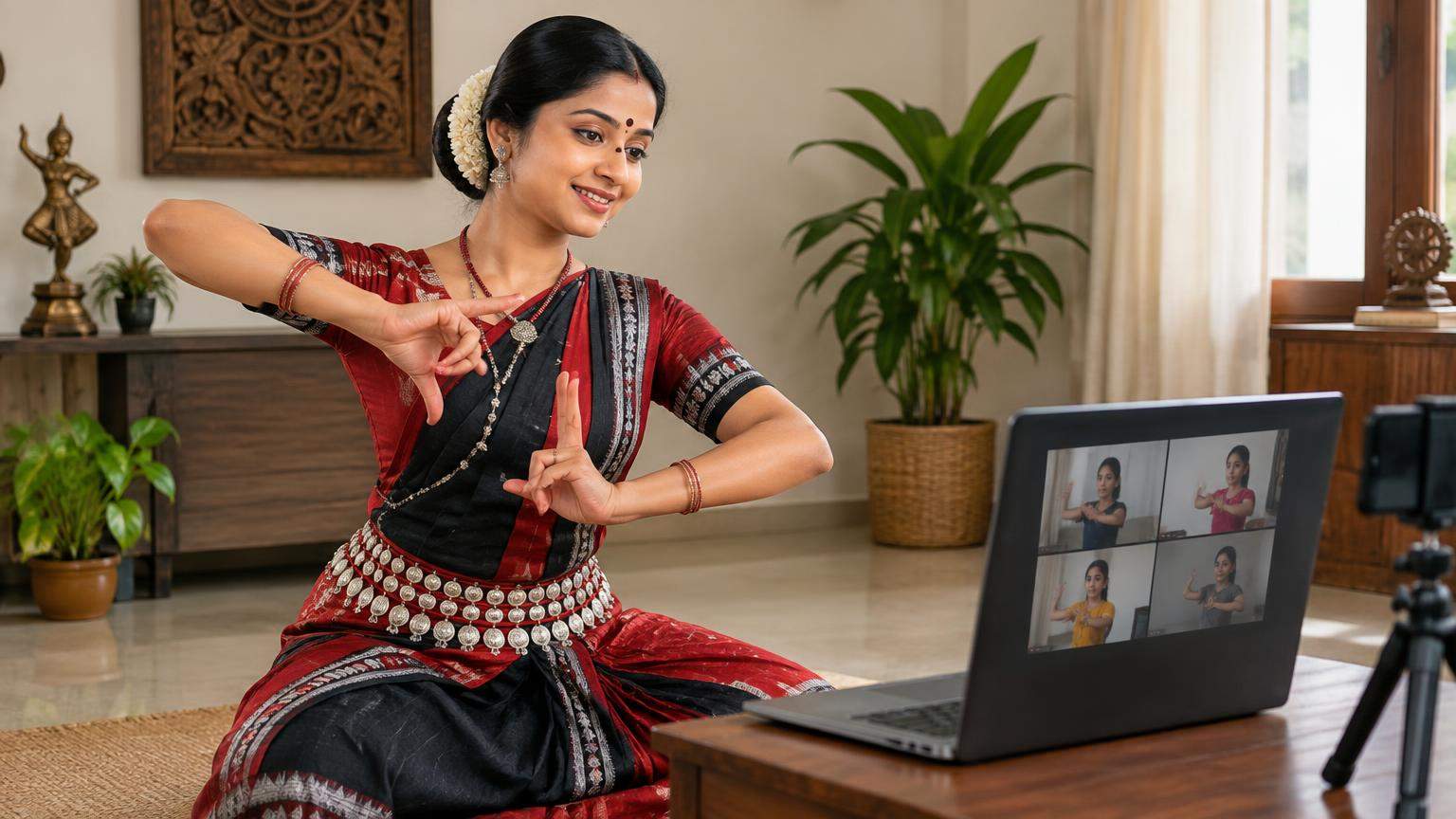

Teaching online Odia dance classes can turn your years of practice in Odissi and regional Odia styles into a flexible, location‑independent income stream—if you plan your syllabus, tech setup, pricing and policies carefully from the start.
What Are Online Odia Dance Classes and Who Can Teach Them?
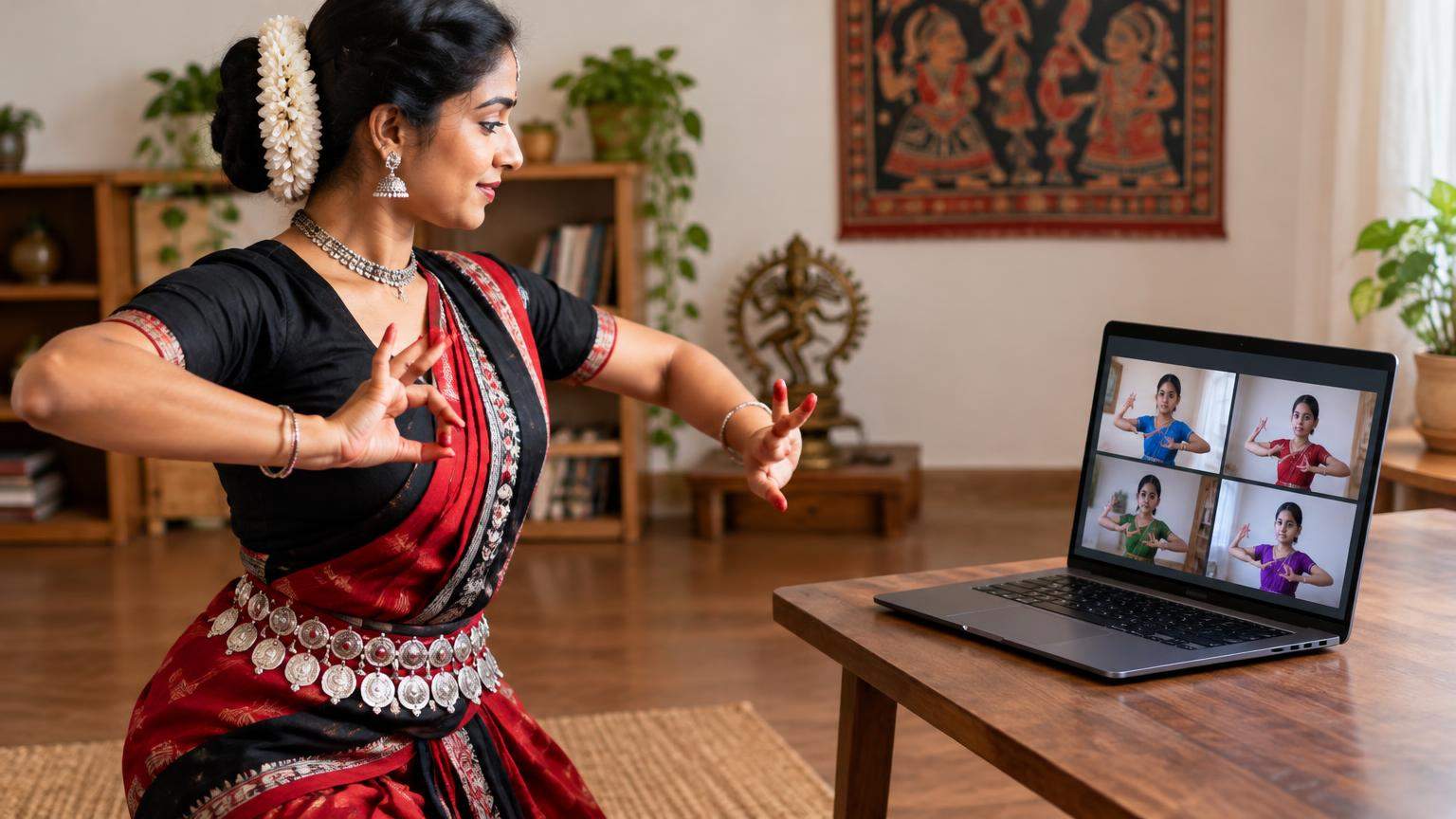
Online Odia dance classes are structured lessons in Odissi and/or Odia folk and film styles delivered over the internet, usually through live video platforms like Zoom or Google Meet, sometimes combined with recorded lessons and practice videos. Established Odissi schools have been teaching remotely for more than a decade; for example, one long‑running academy reports teaching Odissi online since 2010, emphasising step‑by‑step guidance and individual corrections even at a distance. [1]
Odia dance versus Odissi
“Odia dance” can mean two overlapping things:
- Odissi – the classical dance form of Odisha, rooted in temple traditions and recognised as one of the major classical dances of India. [6]
- Odia folk/film/devotional styles – including regional forms such as sambalpuri folk dance, festival and community dances, and Odia film choreography. These are usually less standardised and more flexible in syllabus.
Most established online institutions brand their classes as Odissi rather than generic “Odia dance”, so if you plan to teach folk or film styles as well, be clear about the distinction in your marketing and course descriptions. [1][6]
Who is realistically ready to teach?
You are more likely to build a sustainable online class if you:
- Have several years of disciplined training in Odissi under a recognised guru or institution, or strong community recognition in Odia folk/film choreography.
- Can demonstrate basics (posture, chauka, tribhangi, hand gestures, rhythm) accurately and slowly for beginners.
- Are comfortable demonstrating on camera and giving verbal corrections.
- Understand basic Hindi/Odia/English (or your target students’ language) for clear instruction.
Formal degrees are helpful but not mandatory; many online Odissi schools are built by experienced practitioners who emphasise their lineage, years of training and performance background instead of diplomas. [1][2]
Choosing Your Dance Style and Target Students
Before buying equipment or creating social media accounts, define exactly what you will teach and to whom. This decision influences pricing, marketing and even your tech setup.
1. Decide on your main style
A practical way to structure your offer is:
- Odissi‑focused track
- Odia folk & semi‑classical track
- Sambalpuri or festival dance routines for school/college events.
- Semi‑classical choreographies on popular Odia or devotional songs.
You may teach both, but it is usually clearer to lead with one identity—for example, “Online Odissi & Odia Folk Dance Classes” with separate beginner pathways.
2. Pick your student profile
Common target groups for online Odissi/Odia dance include:
- Children (6–12) – parents look for cultural connection, discipline and safe movement.
- Teens – interested in performances, exams, or school/college competitions.
- Adult beginners – professionals in cities or abroad wanting to reconnect with Odia culture.
- Intermediate/advanced Odissi students – seeking item coaching, abhinaya refinement or performance preparation.
Defining a primary audience helps you design an appropriate syllabus and class length. Many existing online Odissi academies offer separate batches for kids and adults and emphasise individual attention for overseas learners. [1][3]
Skills and Equipment Needed to Teach Dance Online
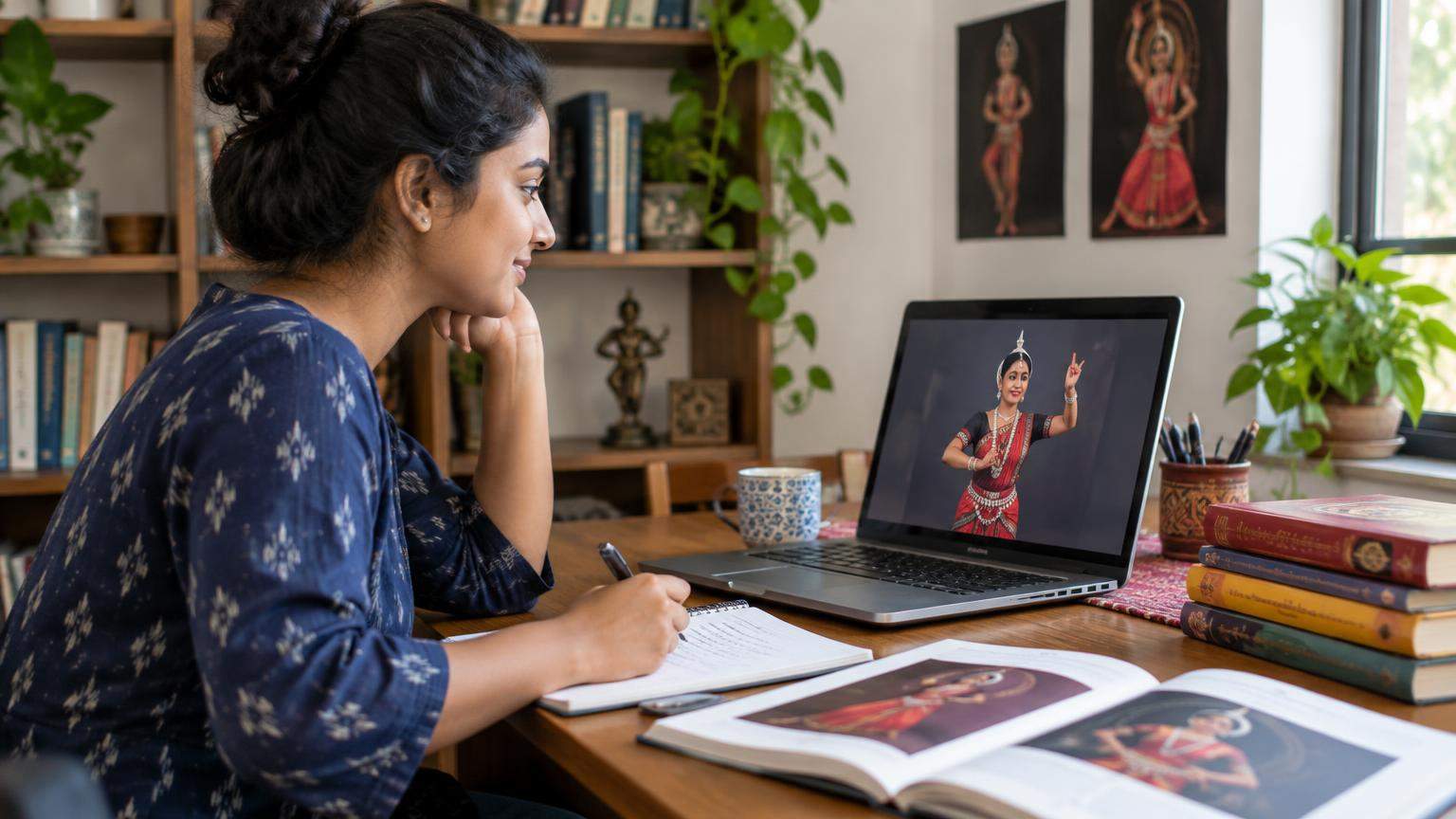
You do not need a full studio to start, but you do need a minimum level of technical readiness and a safe teaching environment.
1. Core teaching and communication skills
- Ability to break down movements into slow, clear steps.
- Patience to repeat, observe small webcam windows and give specific corrections (“lift your left elbow”, “soften the wrist”).
- Comfort with basic counts (taali, khaali, bol) and explaining rhythm verbally.
- Clear class rules around warm‑up, water breaks and camera placement to reduce injury risk.
Many established online academies highlight “personal guidance, corrections and individual attention” as key benefits; this becomes a major differentiator compared with random YouTube tutorials. [2][3]
2. Minimum equipment checklist
You can begin with:
- Device: A smartphone with a good camera, or a laptop with a decent webcam.
- Stable internet: Enough bandwidth to stream video without constant drops.
- Tripod or stable stand: So your full body is visible, including feet.
- Mic / audio: Wired earphones or a basic clip‑on mic can make your voice clearer over music.
- Lighting: A ring light or strong side lighting so posture is visible; avoid strong backlight from windows.
- Practice space: Non‑slippery floor, enough room to take a few steps without going out of frame.
As you grow, you can add a larger monitor (to see students clearly), better speakers and acoustic treatment, but starting lean keeps your risk low.
How to Plan a Beginner‑Friendly Dance Course
A structured syllabus is one of the biggest reasons students choose paid classes over random free content. Online Odissi schools typically describe a clear, step‑by‑step approach to technique and repertoire, which you can emulate at your own scale. [2][4]
1. Map a 3–6 month foundation
For a complete beginner Odissi or semi‑classical foundation, outline:
- Month 1: Posture and basic stances
- Warm‑up, stretching, joint mobility.
- Chauka and tribhangi (for Odissi) or basic folk stance.
- Simple walking patterns and arm positions.
- Month 2: Footwork and simple sequences
- Basic tatkar/paddhant‑style footwork in slow tempo.
- Hand gestures (hasta mudras) and simple coordination.
- Month 3: Short choreography
- Very short Odissi sequence or folk routine set to simple rhythm.
- Introduction to basic abhinaya (facial expression) if relevant.
Create similar outlines for intermediate tracks (e.g., “Mangalacharan in 12 weeks” or “Sambalpuri festival routine series”). Specialist platforms often structure courses around specific pieces or themes, which can inspire your module design. [5]
2. Break each class into segments
A typical 60‑minute beginner online class can be:
- 10 minutes – warm‑up and basic conditioning.
- 15 minutes – revision of last class (steps done without music first).
- 25 minutes – new technique or choreography.
- 10 minutes – Q&A, corrections, homework explanation.
Always leave 5–10 minutes for questions; personal correction is a major value‑add in online Indian classical dance tuition. [2][3]
3. Use practice videos and clear homework
Teachers and students in Indian classical dance communities repeatedly mention the importance of having clean demo recordings that students can compare themselves against between classes. [8] To support this:
- Record a short demo of the day’s steps (in slow and normal tempo) after each class.
- Share the link in a closed WhatsApp/Telegram or Google Drive folder labelled by date and topic.
- Assign homework like “record 30 seconds of Section A and upload by Friday”.
Explain clearly that recordings are for personal practice only and must not be re‑uploaded or redistributed.
Choosing a Platform for Live and Recorded Classes
Existing Odissi schools run online batches using mainstream video tools like Zoom, Google Meet and Microsoft Teams, often combined with one‑on‑one or small‑group formats. [3]
1. Live teaching tools
Realistic starting options in India include:
- Zoom – commonly used for interactive classes; offers breakout rooms, spotlighting and recording on paid plans.
- Google Meet – browser‑based, works well if your students already use Google accounts.
- Microsoft Teams – more common in institutional settings or if your students are linked to schools using Teams. [3]
You can begin on the free tiers to test your format, then upgrade later if you need longer sessions or cloud recordings. Always check the official help pages for current limits and pricing.
2. Sharing recordings and resources
To share demo videos, notes and music references, you can use:
- Google Drive or OneDrive folders organised by batch and month.
- Unlisted YouTube videos for demo clips (not searchable but easy to play on any device).
- A simple private blog or website section if you want everything in one place.
Some dance schools mention that they provide recordings for all batches, combining live interaction with replay access for revision. [9]
3. Selling structured recorded courses
If you choose to create a pre‑recorded Odissi or Odia folk course (for example, “12‑week Odissi basics”), you need a way to host and sell it securely. One comparison of online course platforms for India highlights local tools such as Classplus and Instamojo that support selling digital courses, in addition to global options. [10] Check each platform’s latest pricing, storage limits and payment methods before committing.
4. Choosing your basic model: live, hybrid or recorded‑only
The table below compares the three common formats used by online Indian classical dance teachers.
| Model | How it works | Pros | Cons | Best for |
|---|---|---|---|---|
| Live only | Weekly batches on Zoom/Meet; no official recordings. | Low setup; high interaction; easy to start. | Students who miss class fall behind; no replay for revision. | Small starter groups; testing your teaching style. |
| Live + recordings | Live batches plus replay access via Drive/YouTube links. | Best learning experience; attractive for working adults and NRI students. | Requires more storage, organisation and clear recording policies. | Ongoing batches where you aim for strong results and word‑of‑mouth. |
| Recorded‑only | Pre‑recorded syllabus; students learn at their own pace. | Time‑efficient once created; can reach many students. | Less feedback; lower completion rates; needs strong production quality. | Specific pieces or foundation modules once you have experience teaching them live. |
Many respected Odissi resources successfully use the recorded‑course model for specific items or techniques, often under a curated platform brand. [5]
Step‑by‑Step Guide to Starting Your First Class
Use this practical sequence to launch your first batch of online Odia dance classes.
- Clarify your offer
- Example: “Beginner Odissi basics for adults – 8 live classes per month, 60 minutes each, with practice videos”.
- Choose your tools
- Start with Zoom or Google Meet for live classes; use Google Drive for recordings.
- Prepare your teaching space
- Mark floor boundaries so you stay within camera frame.
- Test lighting and audio at class time to avoid surprises.
- Create a 4–8 class mini‑syllabus
- Write down exactly what you will cover in each class (warm‑up, steps, counts, small sequence).
- Set your pilot pricing and batch size
- Plan payments
- For your first batch, you can accept payments via standard Indian digital methods (for example, UPI or local payment links offered by course platforms featured in Indian comparisons). [10]
- Design a simple enrollment form
- Use Google Forms to collect name, age, location, experience, parental consent (for minors), and agreement to your basic rules (no re‑sharing recordings, camera on during class, etc.).
- Offer one trial or demo class
- Follow the structure of a normal class but slightly shorter; clearly explain your syllabus and expectations.
- Free trial classes are a common practice mentioned in online Indian classical dance communities. [8]
- Run your first batch
- Be strict about start/end times and homework.
- After 4–8 classes, collect feedback through a quick survey and refine your structure.
How to Set Class Fees and Estimate Teaching Costs
There is no standard fee chart for online Odissi or Odia dance across India; many schools ask prospective students to enquire directly, and published prices are rare. [4][7] That means you need to set your own fees based on your costs, experience and target audience, without assuming guaranteed profits.
1. Understand your cost categories
List your likely expenses per month:
- Internet and electricity.
- Zoom or other video subscriptions (if you move beyond free tiers).
- Cloud storage or higher Google Drive quota for recordings.
- Any course/website platform subscription you choose. [10]
- Payment processing or platform fees, depending on which tool you use. [10]
- Equipment upgrades set aside as a budgeted cost (lights, tripod, mic).
2. Build a hypothetical pricing example
The numbers below are purely illustrative to show how to think about pricing; you must adjust them to your own situation, and actual gateway and platform fees can change.
- You plan to teach two beginner batches of 8 students each (16 students total).
- Each student attends 8 live classes per month (twice a week).
- You charge ₹1,000 per student per month for this batch.
- Your monthly revenue before expenses would be 16 × ₹1,000 = ₹16,000.
- If you spend, say, ₹1,200 on upgraded internet and ₹800 equivalent on software and storage, and you pay transaction/platform charges on each fee collection, your net earnings will be lower.
This simple example shows why keeping fixed costs low at the beginning is important; increasing your student count or fees gradually as your reputation grows is often safer than starting with heavy infrastructure.
3. Tier your pricing by value
Many teachers charge more for:
- One‑on‑one coaching versus group classes.
- Advanced item or performance preparation compared with basic fitness/folk routines.
- Recorded course access plus live doubt‑clearing compared with live classes only.
You might, for instance, have:
- A group beginner batch at a lower monthly fee.
- A small premium batch (maximum 5 students) with individual feedback sessions.
- Occasional one‑off workshops (e.g., “Sambalpuri Garba fusion routine in 3 sessions”) at a per‑workshop price.
Always present fees honestly and in writing before enrollment, and avoid promising specific earnings or placement opportunities.
Creating a Timetable, Trial Class and Enrollment Process
1. Timetable design
Consider your students’ time zones and daily routines:
- Indian schoolchildren – evenings or weekend mornings.
- Working adults in India – late evenings (after 8 pm) or weekends.
- NRI students – test at least two possible slots that work across IST and their location.
Many online Odissi academies serve students abroad as well as in India, so specifying the time zone (IST) in all communication helps avoid confusion. [1][3]
2. Trial or demo classes
A focused trial class should:
- Be 30–45 minutes long.
- Include a short warm‑up, one or two basic steps, and a mini sequence.
- End with a clear explanation of your syllabus, fees, expected practice time, and policies on attendance and recordings.
Classical dance communities often use trial classes as a low‑risk way for students to test compatibility with the teacher and style. [8]
3. Enrollment workflow
A simple enrollment pipeline might look like this:
- Student fills out an interest form.
- You send details of available batches, fees and policies.
- Student attends a trial class (optional but useful).
- Student confirms and pays for the first month.
- You add them to your batch WhatsApp/Telegram group and share class links.
Document this process once, then reuse it for every new batch.
How to Attract Students Through YouTube, Instagram and Your Website
Many Odissi and Indian classical dancers use YouTube and Instagram primarily as discovery channels, while monetising through paid classes and workshops.
1. YouTube for authority and discovery
YouTube allows you to share:
- Short tutorials (e.g., “How to hold basic Odissi chauka”).
- Performance clips and choreography teasers.
- Live Q&A streams or open warm‑up sessions.
YouTube’s Partner Program rules and monetisation policies change over time and require original, non‑spammy content; creators must check current eligibility thresholds and music copyright rules through the official Help Center. [10] For your dance business, treat ad revenue (if any) as a bonus, not the core income.
2. Instagram for regular visibility
On Instagram you can:
- Post Reels of short practice snippets, behind‑the‑scenes clips and clean excerpts from your choreographies.
- Use Stories for Q&A boxes (“Ask me anything about Odissi basics”) and polls about preferred class timings.
- Answer DMs with your class information and payment process, linking to course or payment pages on your website or chosen platform. [10]
Focus on consistent, culturally respectful content rather than chasing viral trends.
3. Simple website or landing page
Even a one‑page site can list:
- Your bio, training background and gurus.
- Class types, timings and language of instruction.
- Fee range (or at least “contact for current fees”). [4]
- Enrollment form link and contact details.
Over time, you can add student testimonials (with consent) and a gallery of performances.
If you want to build a stronger online presence before launching your classes, read our guide on how to turn your Odia dance skills into a personal brand or business.
Teaching Techniques, Student Feedback and Class Quality
Online Odissi academies consistently emphasise detailed corrections and structured progression as core strengths. [1][2] To maintain quality:
1. Demonstrate from multiple angles
- Show steps facing front, then turn sideways to highlight posture.
- Zoom in on footwork occasionally if your camera allows.
- Describe what students should feel (weight on which foot, lifted chest, relaxed shoulders).
2. Build in feedback loops
- Spend a few minutes in each class watching students one by one and giving specific corrections.
- Encourage them to submit short practice videos between classes (via your private group or folder) and comment briefly.
- Ask for periodic feedback on pace, clarity and difficulty; adjust as needed.
3. Prioritise safety and respect online
- Insist on a basic warm‑up before heavy footwork.
- Remind students to clear their floor area of obstacles.
- Set etiquette around clothing that allows free movement while maintaining cultural norms.
- Keep class links private and use waiting rooms or passwords on live platforms to avoid uninvited guests.
Managing Payments, Cancellations and Student Privacy
1. Payment methods
In India, many small education businesses use domestic course and payment platforms that provide hosted payment pages or course sales tools, as highlighted in local comparisons. [10] You can start with:
- Bank transfer or UPI for very first students.
- Graduating to a payment link or course platform once you have regular batches. [10]
Always send clear invoices or receipts, even if informal.
2. Cancellation and makeup policies
Write and share policies such as:
- Fees are paid monthly in advance and non‑refundable once a batch starts.
- If the teacher cancels a class, it will be rescheduled or adjusted in the next cycle.
- If a student misses a class, they rely on recordings (if provided); no individual makeup unless separately agreed.
Simple rules reduce misunderstandings and protect your time.
3. Recording and privacy
If you plan to record live classes:
- Inform students at enrollment that sessions may be recorded for internal educational use.
- State clearly whether they will receive recordings and for how long they can access them.
- Do not use student images or clips in public marketing without explicit consent.
- Store files securely and avoid sharing batch links publicly.
These steps align with student expectations in many existing online academies, which promise recordings for revision while still emphasising privacy and small‑group attention. [2][9]
Common Mistakes New Online Dance Teachers Should Avoid
- Trying to copy big academies immediately – start small and refine your basics before building complex recorded courses or multiple levels.
- Ignoring syllabus planning – jumping randomly between items confuses students and makes retention weaker.
- Underestimating tech tests – always test camera, audio and internet stability before class.
- Overloading classes with students – online correction is harder in large groups; many successful teachers keep batches relatively small. [2][3]
- Using copyrighted music carelessly on public platforms – check platform copyright policies, especially for YouTube and Instagram; consider using shorter excerpts or licensed/royalty‑free tracks for promotional clips. [10]
How to Improve and Grow Your Online Odia Dance Classes
Once your first batches are stable, you can grow carefully.
1. Refine based on data and feedback
- Track attendance and homework completion to see where students struggle.
- Survey students every few months about class pace, timing and content.
- Experiment with minor variations (shorter classes, more focused technique sessions, weekend workshops) and see what resonates.
2. Add advanced and specialist modules
Inspired by curated Odissi course platforms that offer item‑specific classes, you can gradually introduce: [5]
- Abhinaya‑focused workshops.
- Item‑based Odissi modules (e.g., Batu, Pallavi) for students with sufficient foundation.
- Regional folk intensives before festival seasons.
3. Collaborate within the Odia arts ecosystem
- Partner with Odia musicians, storytellers or language teachers for joint workshops.
- Appear in online festivals or curated showcases to reach new audiences.
- Connect with other Odia cultural organisations abroad who may want regular online sessions for their communities.
Frequently Asked Questions
Is it really possible to learn Odissi properly online?
Multiple Odissi schools have taught online students around the world for years, often since the early 2010s, using structured syllabi, personal corrections and recordings to support practice. [1][2][4] While in‑person training has advantages, online formats can work well when both teacher and student are disciplined.
Should I start with Odissi or Odia folk dance for online classes?
If your training is primarily classical, starting with Odissi basics gives you a clear, recognised framework and attracts students seeking formal training. [6] If you specialise in folk or semi‑classical choreography, you can build accessible routines for festivals and events, but be transparent that these are not classical Odissi classes.
What batch size is ideal for online Odissi?
Many successful online academies emphasise small groups and individual attention, and community discussions often mention batch formats such as 6–10 students with weekly classes. [2][3][8] Your ideal size depends on your ability to observe and correct on screen; it is safer to start smaller and expand later.
Can I rely only on recorded courses without live interaction?
Recorded courses can work well for specific items or for students who already have a foundation, as shown by curated Odissi course platforms. [5] For complete beginners, some live interaction usually leads to better technique and fewer injuries, so many teachers combine both.
Do I need to register a business or pay GST to teach online?
Whether you need a formal business registration or to charge GST depends on your total income, local regulations and how you structure your activity. This guide cannot provide legal or tax advice. You should consult a qualified professional or official government resources in India to understand your obligations.
Disclaimer
This guide provides general educational information to help you plan and run online Odia dance classes. It does not constitute legal, tax, financial or professional business advice, and it cannot guarantee any level of income, student enrollment or results. Platform features, pricing, payment gateway rules, taxation and regulations in India can change; always consult the latest official documentation for tools you use and seek advice from a qualified professional where needed, especially regarding business registration, GST, contracts, music copyright and privacy laws in your jurisdiction. [5][10]
Sources and Further Reading
Primary and supporting references. Verify time-sensitive information at the original publisher.
- Source Document — www.odissionline.com
- Online Dance Education — www.odissionline.com
- Source Document — odissilessonsonline.com
- Source Document — www.danceclassonline.in
- Classes — www.natyasutraonline.com
- Odissi — en.wikipedia.org
- Sharmila Biswas — en.wikipedia.org
- Megathread Online Classes — www.reddit.com
- Source Document — www.kumkumnrityabhumika.com
- Best Platform Sell Online Courses India — peerseek.io
Research date: October 17, 2026 (UTC). Links may change.