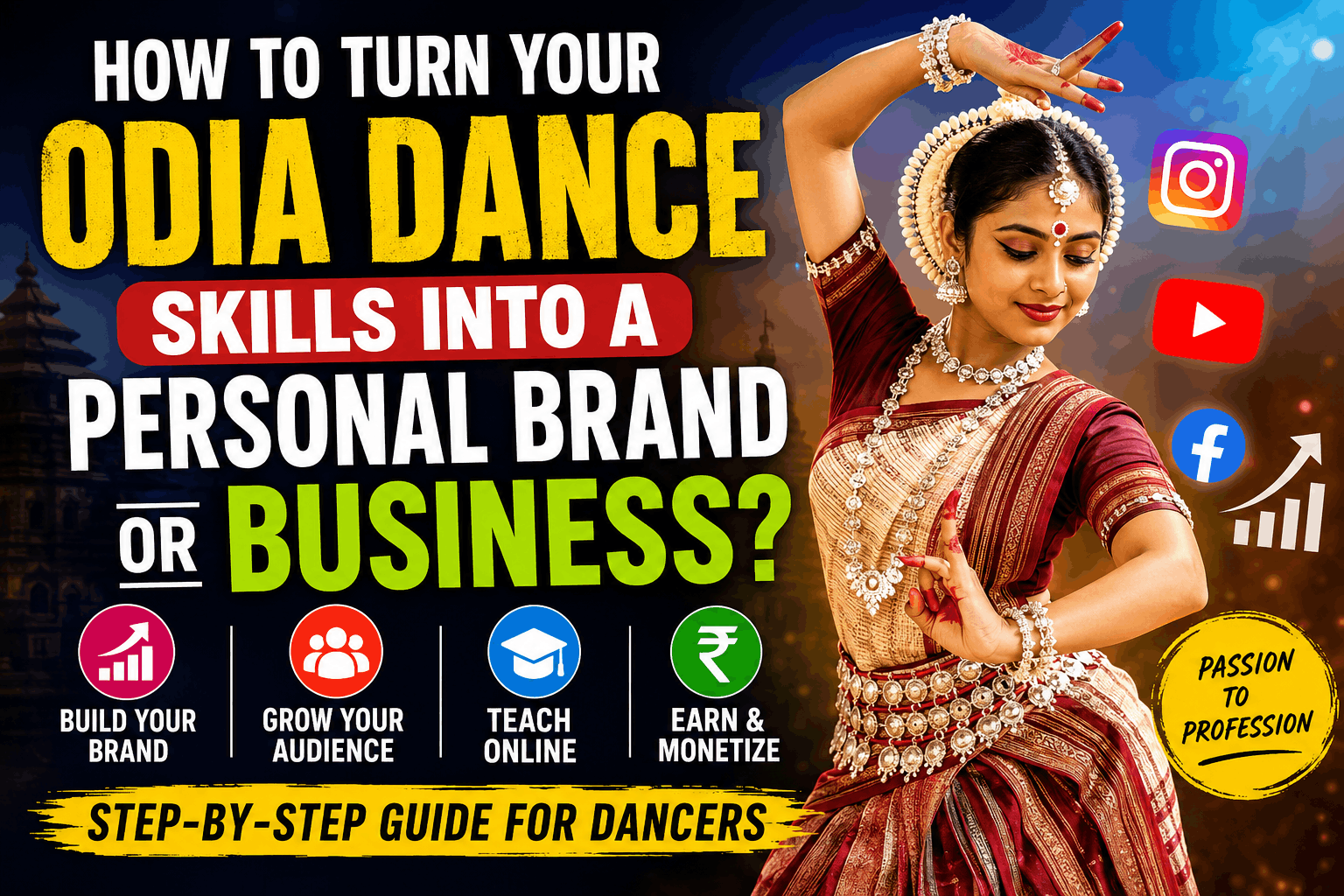

How to Turn Your Odia Dance Skills Into a Personal Brand or Business
Being good at Odia dance is no longer limited to performing on a stage, at a cultural program, or during a family celebration. Today, a dancer can use the same skill to build an online audience, teach students, work with brands, perform at events, create digital products, and even develop a full-time creative business.
Whether you perform Odissi, Sambalpuri, Gotipua-inspired choreography, folk dance, or your own fusion style, the internet gives you access to people far beyond your local area.
But simply uploading dance videos is not enough to build a strong personal brand.
You need to give people a reason to remember you.
That means understanding what makes your dance style different, presenting yourself consistently, building a relationship with your audience, and gradually turning attention into real opportunities.
This guide explains how you can turn your Odia dance skills into a recognizable personal brand and, over time, a sustainable business.
1. Start by Understanding What Makes You Different
Before creating a logo, website, or Instagram page, ask yourself a simple question:
Why should someone follow me instead of another dancer?
Your answer does not have to be complicated.
Maybe you specialize in traditional Odissi.
Maybe you create Sambalpuri dance routines for weddings.
Maybe you combine classical movements with modern music.
Maybe you teach Odia dance to children.
Or perhaps you explain the cultural meaning behind different songs and movements.
Your unique combination of skills, personality, background, and interests becomes your personal brand.
Real-Life Example
Imagine two dancers posting the same popular Odia song.
The first dancer simply uploads the performance.
The second dancer posts the performance and adds:
“This step is inspired by a traditional Sambalpuri movement. Here is what it represents and how beginners can learn it.”
Both may be talented, but the second creator gives the audience something extra.
People now have a reason to remember that dancer as someone who not only performs but also teaches and explains Odia culture.
That is how a personal brand begins.
2. Create a Consistent Online Identity
If you want people to recognize your work, make it easy for them to find you.
Try to use the same or a very similar username across platforms such as:
- YouTube
- Threads or other social platforms
- Your website, if you have one
Your profile photo, name, bio, and overall presentation should also feel consistent.
You do not need an expensive professional branding agency at the beginning.
A clear photograph, simple bio, and recognizable username are enough.
For example:
Name: Ananya Odia Dance
Bio: Odissi & Sambalpuri Dancer | Tutorials | Performances | Workshops
Someone visiting the page immediately understands what the creator does.
That clarity matters.
3. Do Not Post Only Dance Performances
One common mistake new creators make is uploading only complete dance videos.
Performances are important, but your audience may also enjoy seeing the process behind them.
A good dance content page can include:
- Full dance performances
- Short Reels and Shorts
- Beginner tutorials
- Practice sessions
- Behind-the-scenes videos
- Costume preparation
- Makeup routines
- Dance mistakes and funny moments
- Cultural explanations
- Music selection
- Stage preparation
- Fitness and flexibility routines
- Stories from past performances
This creates variety and gives followers more reasons to return.
Real-Life Example
Suppose you spend three weeks preparing for an Odissi stage performance.
Instead of posting only the final performance, you could create:
Day 1: Choosing the song
Day 5: Learning difficult movements
Day 10: Costume preparation
Day 15: Rehearsal mistakes
Performance Day: Final dance
After the show: What you learned
One event can become six or seven pieces of content.
This is how professional creators get more value from the work they are already doing.
4. Use Short Videos to Reach New People
Long dance videos are great for dedicated viewers, but short-form videos are often better for reaching people who have never seen your content before.
Instagram Reels and YouTube Shorts can be especially useful.
Instead of uploading random clips, create videos with a clear purpose.
For example:
“3 Easy Sambalpuri Steps for Beginners”
“Learn This Odissi Hand Movement in 30 Seconds”
“Traditional Odia Dance vs Modern Fusion”
“One Dance Step, Three Different Odia Songs”
These ideas can attract people even if they were not originally searching for you.
Once they discover your short videos, some may follow your profile, watch longer performances, join your classes, or book you for an event.
5. Teach What You Know
Teaching can be one of the most practical ways to turn dance skills into income.
You do not need to open a large dance studio immediately.
Start small.
You could teach:
- One-to-one online lessons
- Beginner group classes
- Weekend workshops
- Children’s classes
- Wedding choreography
- Dance fitness sessions
- Recorded courses
Online teaching can also help you reach Odia families living outside Odisha or even outside India.
Real-Life Example
Imagine an Odia family living in Canada.
Their daughter wants to learn a traditional Odia dance for a cultural program, but there is no Odissi teacher nearby.
If you offer online beginner classes, location is no longer a major problem.
You can teach her from Odisha using a video call.
One student may later recommend you to another family.
Over time, a small online class can grow into a regular source of income.
6. Offer Wedding and Event Choreography
Weddings are another practical opportunity for dancers.
Many families want:
- Couple performances
- Family dance routines
- Bridal performances
- Sangeet choreography
- Anniversary performances
- Odia-themed cultural performances
If you are good at teaching people who are not professional dancers, this can become a valuable service.
You can offer different packages.
For example:
Basic Package: One song choreography
Family Package: Three to five group performances
Premium Package: Full event choreography with rehearsals
Clear packages make your service look more professional and prevent confusion about pricing.
You can showcase previous choreography on Instagram or YouTube, with permission from the people involved.
7. Create Digital Products
Your income does not always have to depend on performing live.
You can also create products once and sell them repeatedly.
Possible digital products include:
- Beginner dance video courses
- Step-by-step tutorials
- Practice schedules
- Choreography guides
- Dance fitness programs
- Costume guides
- Performance preparation checklists
- Recorded workshops
For example, you could create:
“Sambalpuri Dance for Beginners – 10 Basic Steps”
or
“30-Day Odissi Practice Routine for Beginners”
A person who cannot attend your live class may still be willing to buy a structured course.
The important thing is to make the product genuinely useful rather than simply putting information behind a paywall.
8. Build Trust Before Trying to Sell Everything
A personal brand grows faster when people feel that the creator genuinely helps them.
If every post says:
Buy my class.
Book me.
Purchase my course.
people may quickly lose interest.
Instead, provide useful free content as well.
Teach a small step.
Explain a traditional movement.
Share a practice tip.
Answer common beginner questions.
Show your own progress.
When people repeatedly learn something from you, they naturally begin to trust your skills.
Later, when you launch a paid class, they already know what kind of value you provide.
That is much stronger than constantly advertising yourself.
9. Collaborate With Other Creators
You do not have to build everything alone.
Collaborations can expose your work to completely new audiences.
You could collaborate with:
- Other dancers
- Odia singers
- Musicians
- Makeup artists
- Fashion designers
- Photographers
- Videographers
- Fitness creators
- Cultural pages
- Local businesses
Real-Life Example
Suppose an Odia singer releases a new song.
You could create the official or an unofficial dance routine for that track.
The singer shares your video.
Your followers discover the singer, and the singer’s followers discover you.
Both creators benefit.
This type of collaboration can often produce more growth than simply posting another solo video.
10. Work With Odia Fashion, Jewellery and Cultural Brands
Once you build an audience, businesses may become interested in working with you.
Dance creators have a natural connection with:
- Saree brands
- Handloom businesses
- Jewellery brands
- Makeup products
- Dance costume sellers
- Cultural events
- Tourism businesses
- Local fashion designers
You do not need millions of followers.
A smaller creator with an engaged local audience can sometimes be more useful to a regional business than a huge account with an unrelated audience.
For example, an Odisha-based handloom business may prefer a dancer with 15,000 engaged Odia followers over a general entertainment page with 500,000 followers.
Relevance matters.
11. Make Your Brand Personal
People may discover you because of your dance, but they often stay because of your personality and story.
Do not be afraid to show some of the real journey.
Talk about:
- Your first performance
- A mistake you made on stage
- Why you started dancing
- Your hardest choreography
- Someone who inspired you
- How you balance dance with studies or work
- What Odia culture means to you
Perfect videos can impress people.
Personal stories help them connect with you.
Example
Instead of simply posting:
“My first Odissi performance.”
you could write:
“I was so nervous before this performance that I forgot the opening movement during rehearsal. I almost decided not to go on stage. This was the performance that finally gave me confidence.”
That story gives the video emotion.
People remember emotion much longer than another perfectly edited Reel.
12. Attend Cultural Festivals and Real-World Events
Online visibility is useful, but real-world credibility still matters.
Participating in cultural programs, festivals, competitions, workshops, and artist events can help you meet people who may never discover you online.
Keep an eye on opportunities associated with cultural institutions and organizations such as:
- Sangeet Natak Akademi
- SPIC MACAY
- ICCR
- State cultural departments
- Universities
- Local cultural organizations
- Dance festivals
- Indian community organizations abroad
Always check their official websites or announcements for current programs and eligibility requirements.
Performing at recognized events can strengthen your portfolio and may lead to invitations, collaborations, workshops, or teaching opportunities later.
13. Build a Community, Not Just a Follower Count
Ten thousand followers who never interact with you are less valuable than one thousand people who genuinely care about your work.
Try to build a community.
You could create:
- A Telegram channel
- WhatsApp community
- Facebook group
- Email newsletter
- Members-only group
Share useful updates rather than simply promotional posts.
You could organize:
Monthly Dance Challenge
Followers learn one step and upload their version.
Student Spotlight
Feature one learner every month.
Live Practice Session
Practice together once a month.
Odia Dance Discussion
Talk about traditional forms, music, costumes, or history.
When followers start interacting with each other, your page becomes more than a profile.
It becomes a community.
14. Build a Professional Portfolio
If you want paid opportunities, create a simple portfolio showing your best work.
Include:
- Your introduction
- Dance styles
- Experience
- Performance photographs
- Best videos
- Past collaborations
- Workshops
- Testimonials
- Contact information
You can begin with a simple website or even a well-organized portfolio page.
Imagine an event organizer is considering two dancers.
One sends:
“Hello sir, I dance. Please give me opportunity.”
The other sends a professional page containing performances, experience, videos, pricing information, and contact details.
Who looks more prepared?
Your skills matter, but presentation also matters.
15. Make It Easy for People to Book You
If someone likes your dance and wants to hire you, do not make them search for your contact details.
Clearly mention how people can reach you.
For example:
For Classes & Performances:
Email: [email protected]
Instagram: @yourhandle
Business WhatsApp: available through profile
You can also create a simple enquiry form asking:
- Name
- Event type
- Date
- City
- Number of performances
- Budget range
- Contact number
This saves time for both you and the client.
16. Set Clear Prices and Payment Rules
Once money becomes involved, treat your dance professionally.
Do not decide your price randomly every time someone contacts you.
Create basic rates for:
- Private classes
- Group classes
- Workshops
- Choreography
- Performances
- Brand collaborations
For larger events, ask for clear written confirmation of:
- Event date
- Performance duration
- Location
- Payment
- Travel expenses
- Accommodation, if required
- Cancellation conditions
For many bookings, taking an agreed advance before beginning extensive preparation can also reduce last-minute problems.
Professional behavior protects both the dancer and the client.
17. Do Not Accept Every “Exposure” Offer
At the beginning of your career, you may receive messages like:
“We cannot pay you, but you will get exposure.”
Some unpaid opportunities can genuinely be useful.
For example, performing at a respected cultural event may strengthen your portfolio.
But doing unlimited free work for commercial businesses is different.
Ask yourself:
- Who is organizing the event?
- Who will see my work?
- Will I receive professional photos or video?
- Is this genuinely useful for my portfolio?
- Is someone else earning money from my performance?
Exposure has value only when it actually creates a meaningful opportunity.
18. Protect Your Original Work
As your audience grows, people may repost your videos or copy your choreography.
You cannot prevent every repost, but you can make your ownership clearer.
Use:
- Your username on videos
- Original uploads on your main pages
- Proper credits
- Watermarks when appropriate
If another creator inspires your choreography, credit them where appropriate as well.
Building a professional brand also means respecting other artists’ work.
19. Track What Is Actually Working
Do not judge success only by follower count.
Look at:
- Which videos get shared?
- Which tutorials get saved?
- Which posts bring new followers?
- Which content generates class enquiries?
- Which platform sends you bookings?
- Which videos people watch until the end?
Imagine one performance Reel receives:
100,000 views but zero enquiries.
Another tutorial gets:
8,000 views and five students join your class.
Which one helped your business more?
The answer depends on your goal.
Views are useful, but meaningful results matter more.
20. Build Slowly and Stay Consistent
Personal brands rarely grow overnight.
You may post ten videos and get very little response.
Then one video suddenly performs well.
But that one successful video usually comes after weeks or months of learning what your audience likes.
Do not disappear because your first few posts receive only a few hundred views.
Keep improving:
- Lighting
- Camera angles
- Editing
- Choreography
- Captions
- Storytelling
- Teaching
- Communication
Consistency compounds.
A creator who improves slightly every month can look completely different after one year.
A Realistic Example: From Local Dancer to Small Dance Business
Imagine a fictional dancer named Priya from Bhubaneswar.
She performs Odissi and Sambalpuri dance but initially posts only occasionally on Instagram.
She decides to build her personal brand.
First, she creates a consistent page called:
Priya Odia Dance
Then she posts three types of content:
Monday: Beginner dance tutorial
Wednesday: Short performance Reel
Saturday: Behind-the-scenes or cultural explanation
After a few months, followers begin asking whether she teaches.
She starts one weekend Zoom class with eight students.
Later, she creates a beginner recorded course.
A local saree brand notices her videos and offers a paid collaboration.
Someone who saw her online books her to choreograph an Odia wedding performance.
She eventually creates a simple website where people can book:
- Online classes
- Wedding choreography
- Performances
- Workshops
She does not become famous overnight.
Instead, one opportunity slowly creates another.
That is how dance can gradually move from:
Skill → Content → Audience → Trust → Service → Business
This is a much more realistic path than expecting one viral video to suddenly create a career.
Different Ways an Odia Dancer Can Earn
Once your brand becomes stronger, your income can come from several places:
| Income Source | How It Works |
|---|---|
| Dance Classes | Online or offline lessons |
| Wedding Choreography | Teach couples and families |
| Stage Performances | Paid cultural or private events |
| Brand Collaborations | Promote relevant products |
| Workshops | One-day or weekend training |
| Digital Courses | Recorded lessons |
| YouTube | Monetization subject to platform eligibility |
| Memberships | Exclusive tutorials or communities |
| Affiliate Marketing | Recommend relevant products |
| Event Hosting | Cultural and dance programs |
Do not try to launch everything at once.
Start with one or two income sources that naturally fit your skills.
Frequently Asked Questions
Can I build a dance brand without having a large following?
Yes. A small but engaged audience can be enough to find students, local collaborations, or performance opportunities. Quality and trust are often more important than follower count.
Which social media platform is best for Odia dancers?
Instagram and YouTube are useful starting points because they support both short and long video content. Facebook can also be useful for reaching local communities and event audiences.
Can I earn money by teaching Odia dance online?
Yes. Online private lessons, group classes, workshops, and recorded courses can all be possible income sources.
Do I need a professional camera?
No. A modern smartphone with good lighting and stable framing is enough to begin. Upgrade equipment only when your work actually requires it.
How often should a dancer post on social media?
There is no perfect number. Choose a schedule you can maintain consistently. Posting two or three good pieces of content every week is better than posting daily for one month and then disappearing.
Can traditional Odia dance attract an international audience?
Yes. Cultural dance can appeal to diaspora communities, students of Indian culture, dance enthusiasts, and audiences interested in traditional art forms.
Should I create a website for my dance brand?
You do not need one on day one. Once you start offering classes, performances, workshops, or professional services, a simple website can make your brand easier to understand and contact.
Can a dance creator work with brands?
Yes. Fashion, handloom, jewellery, fitness, cultural, tourism, and lifestyle businesses may be relevant depending on your audience and content.
Conclusion
Turning your Odia dance skills into a personal brand does not mean changing the culture or turning every performance into an advertisement.
It means using modern tools to give your art a larger audience.
Start by understanding what makes your style different. Create useful and entertaining content, show your personality, teach what you know, collaborate with other artists, and build genuine relationships with your audience.
Once people trust your work, opportunities such as classes, performances, workshops, wedding choreography, digital products, and brand collaborations can develop naturally.
Most importantly, do not measure your journey only by followers or viral views.
A dancer with a smaller audience who has regular students, paid performances, and a respected reputation may have built a stronger business than someone with a large audience but no clear direction.
Your dance skill is the foundation.
Your story makes people remember you.
Consistency builds trust.
And when those three things come together, a passion for Odia dance can gradually become a recognizable personal brand and a real creative business.