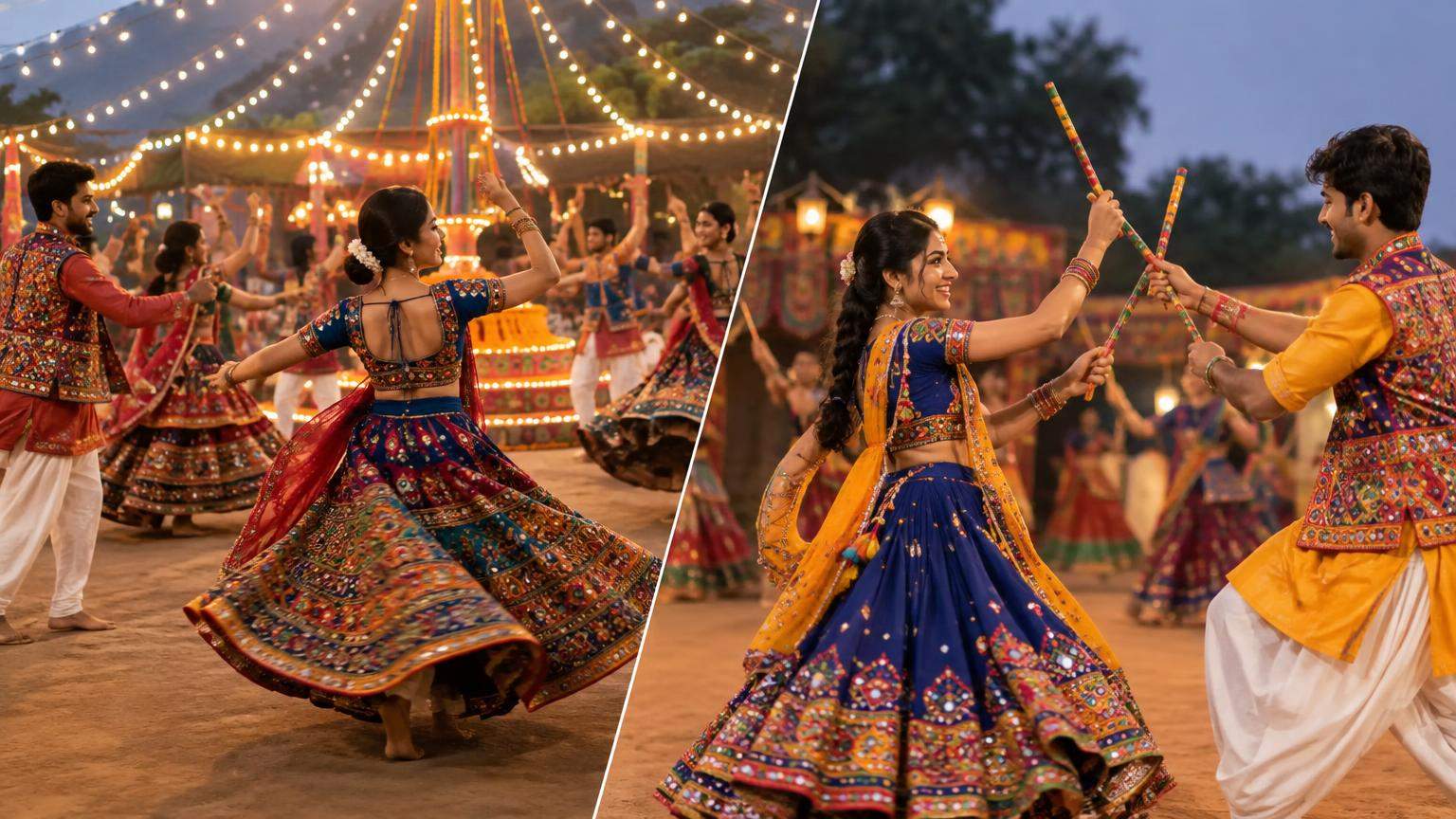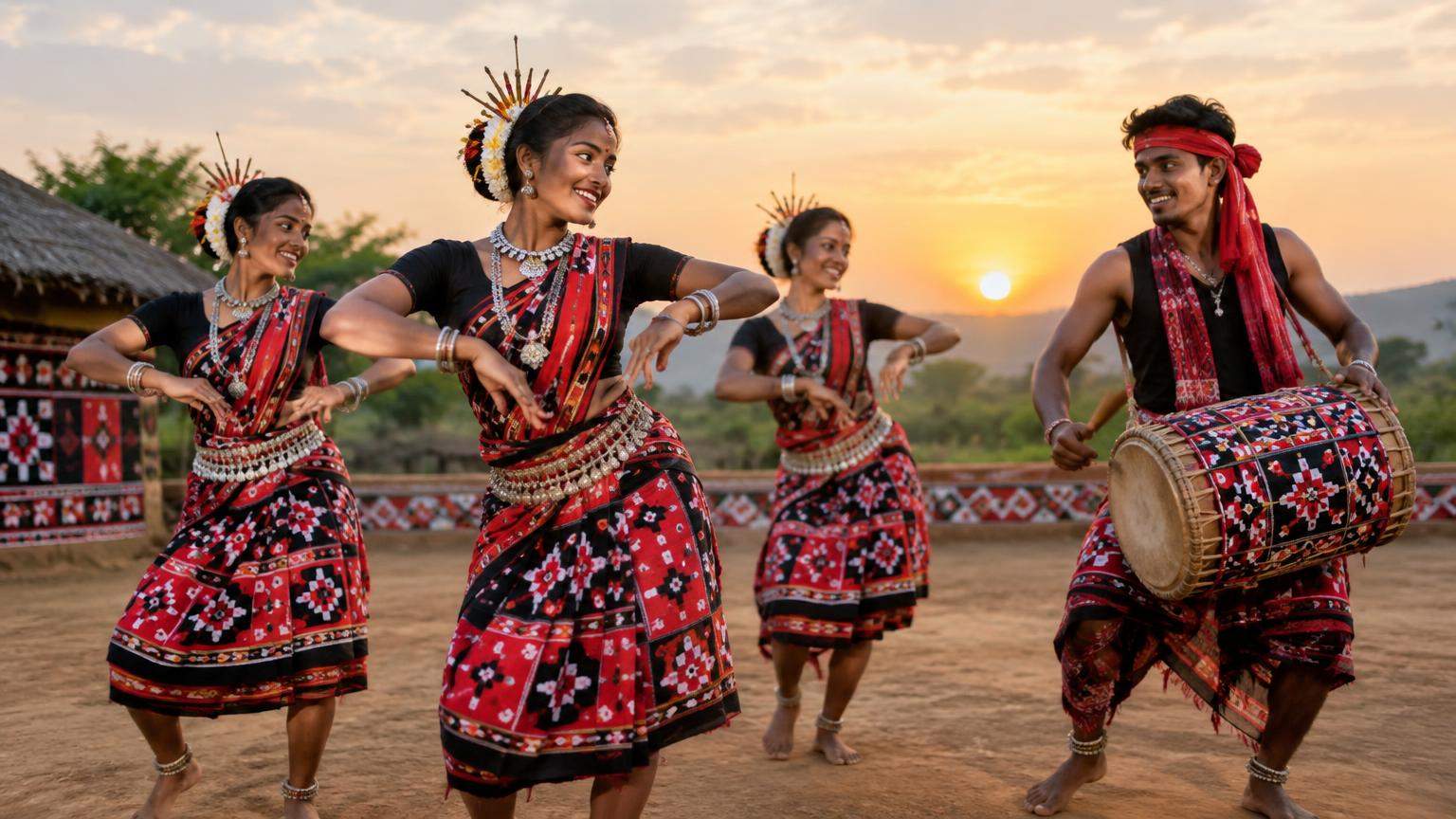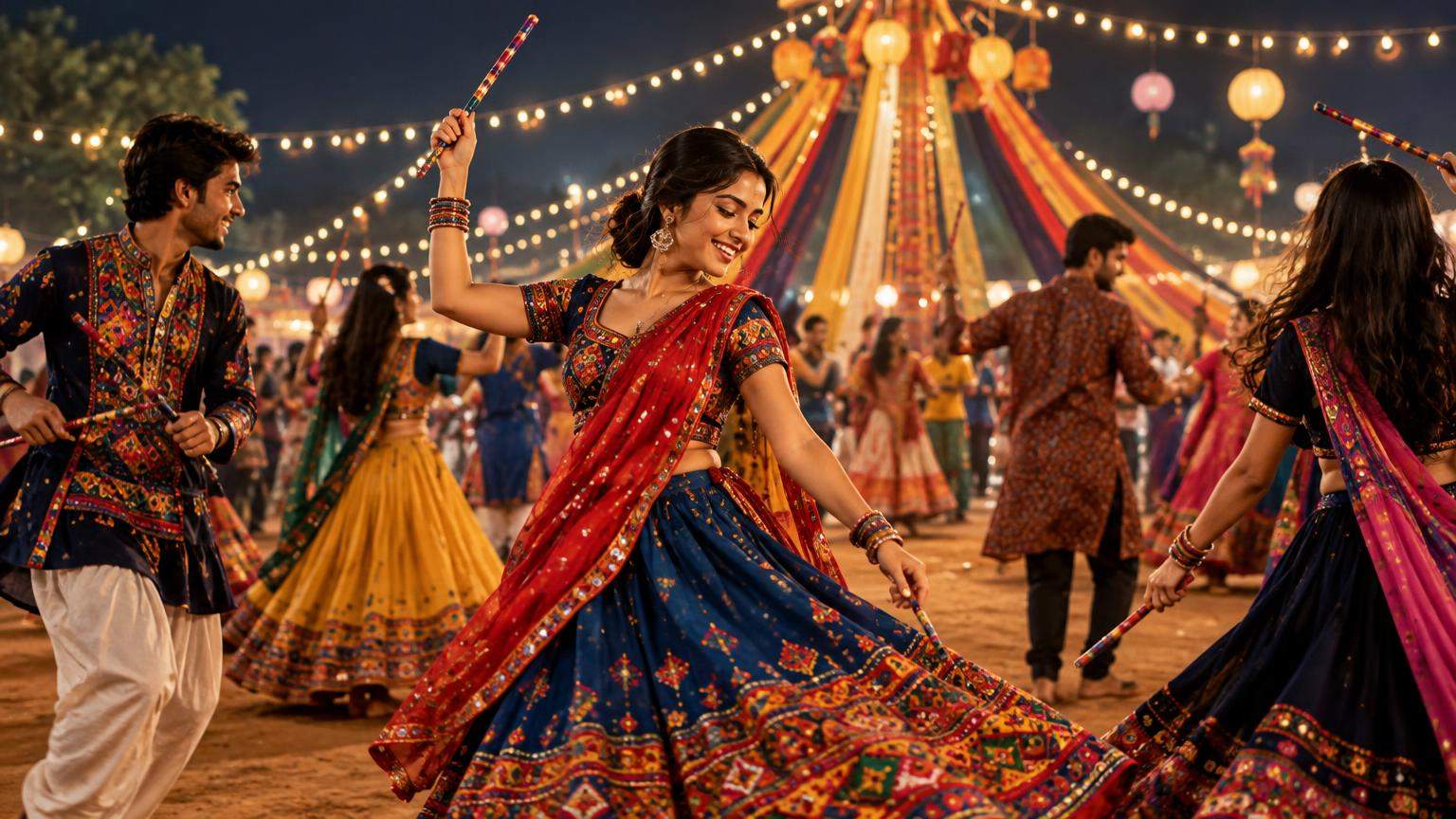

If you are planning your first Navratri Garba night, this navratri garba night guide will walk you through what to expect, what to wear, how to manage the basic steps and how to navigate the circle with confidence and respect.
What to expect at a Navratri Garba night
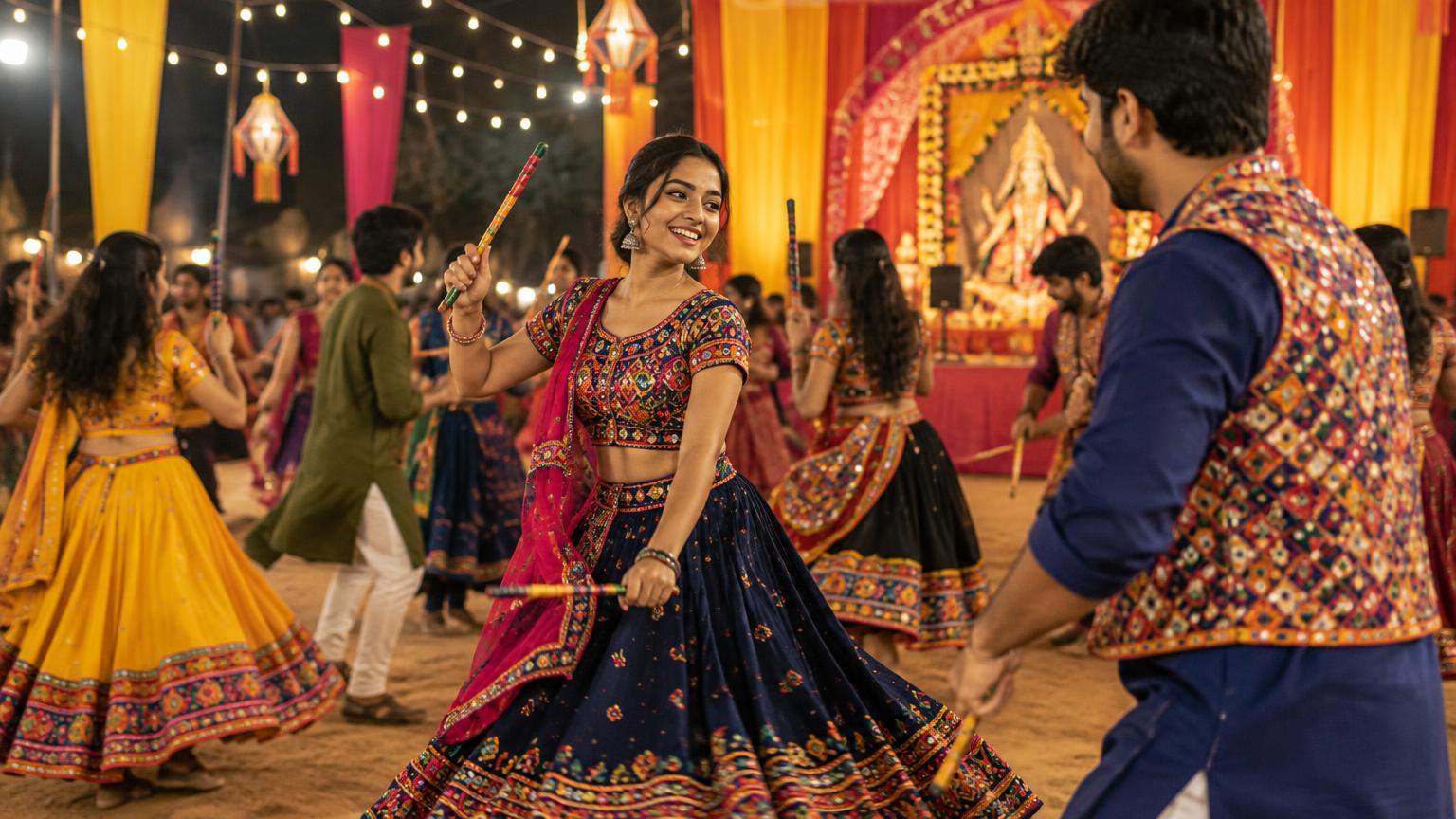
Navratri is a Hindu festival whose name literally means “nine nights” in Sanskrit, and in Gujarat it is closely associated with nightly community dancing in honour of the goddess and feminine energy (Shakti). [3] Garba, a circular folk dance of Gujarat, is one of the central forms performed during these nights. [1]
Official cultural documentation describes Garba as a devotional community dance, traditionally performed in circles around a lamp or an image of the goddess, symbolising the cycle of life with the divine at the centre. [1] The form is important enough that “Garba of Gujarat” was inscribed on UNESCO’s Representative List of the Intangible Cultural Heritage of Humanity, highlighting its role as a living tradition shared by communities in India and across the diaspora. [8]
While every event has its own flavour, a typical Garba night often follows a pattern:
Arrival and atmosphere
- Venues can range from temple courtyards and community halls to large open grounds with thousands of dancers in concentric circles. [2]
- The evening usually starts with slower devotional songs and may include an aarti (a ritual prayer with light) to the goddess before the main dancing begins. [1]
- Expect colour everywhere: embroidered outfits, mirrored textiles, lights and live or recorded music.
Garba rounds
- The first rounds are often traditional Garba songs at a moderate pace, where dancers move in circles using repeating step patterns and claps.
- Over time, the tempo usually increases and the steps become more energetic, something cultural sources note as characteristic of Garba’s build-up through the night. [1]
- Newcomers commonly join the outer circles first, where there is more space and the steps are simpler.
Dandiya raas later in the night
After several rounds of Garba, many events switch to or mix in dandiya raas (often casually called “dandiya”), a related but distinct folk dance that uses decorated wooden sticks. [5] Dancers form lines or circles, tapping their sticks with a partner’s to lively rhythms.
Garba and dandiya share the circular, social feel but have different movements and energy. The table below summarises some broad differences.
| Feature | Garba | Dandiya Raas |
|---|---|---|
| Props | Usually no props; hand claps and arm movements | Uses a pair of wooden sticks (dandiya) |
| Focus | Devotional dance centred on the goddess and Shakti [1] | Folk dance linked to regional Krishna and warrior traditions [5] |
| Formation | Circles around a lamp or shrine, often multiple concentric rings [1] | Circles or facing lines, partner-based stick tapping [5] |
| Movement style | Side-steps, spins, claps, flowing arm patterns | Sharp, rhythmic steps with coordinated stick patterns |
| Energy level | Starts gentle, can become very energetic later [1] | Often high-energy from the start |
Want to understand the two dance styles in more detail? Read our guide on Garba vs Dandiya: Steps, Music and Traditions to explore their differences and decide which style to practise first.
How late does it go?
Tourism and cultural descriptions emphasise that Navratri Garba is a major festival in Gujarat, frequently drawing large crowds and late-night celebrations. [2][7] However, exact closing times, age restrictions and sound limits are set by local organisers and authorities. Always check the official event listing rather than assuming a specific schedule.
Outfits and footwear: practical choices
One of the pleasures of Navratri is dressing up. Traditional Garba outfits are iconic, but they are not universally mandatory. Focus on comfort, modesty and the ability to move freely, then add festive touches.
Traditional outfit examples (not requirements)
Cultural and fashion guides highlight two especially recognisable styles. [6][9]
- Chaniya choli – A flared skirt (chaniya), a fitted blouse (choli) and a dupatta scarf. These sets often feature bright colours, mirror work, embroidery or tie-dye.
- Kediyu set – A short, sometimes flared tunic (kediyu) paired with dhoti-style or loose trousers. These can be richly embroidered or more minimal.
Modern Garba nights include a wide range of clothing choices. Contemporary guides emphasise that while these outfits are classic and festive, they are not the only way to dress; people also mix kurtas, skirts, trousers and Indo‑Western pieces according to comfort, climate and availability. [6][9]
Comfort-first clothing tips
When choosing your clothes, keep these practical points in mind:
- Prioritise breathable fabrics – Cotton, cotton blends and lightweight silks are often more comfortable than very heavy synthetic fabrics, especially in warm, crowded spaces.
- Make sure you can take big steps and turn – Long skirts should not be so tight or heavy that they trip you; trousers should allow you to lunge, side-step and twist comfortably.
- Secure your top or blouse – You will be raising your arms and spinning. Check that closures are strong and that you feel covered and confident.
- Manage your dupatta or scarf – Pin it at the shoulder or across the body so it does not slip, tangle with others or catch underfoot.
- Avoid overly sharp accessories – Large spiked jewellery or protruding pieces can scratch you or other dancers in close circles.
- Think about heat – Many people bring a light shawl or jacket for arriving and leaving, then dance in a simpler inner layer.
Footwear: balancing tradition and safety
Dress guides and cultural descriptions show a mix of practices: dancing barefoot, wearing traditional flat shoes, or using comfortable modern footwear. [6][9]
Because rules vary by venue, treat these as general guidelines rather than fixed rules:
- Check the organiser’s rules – Some religious or temple events may ask you to remove shoes near a shrine, while many large halls and grounds encourage footwear for safety.
- Choose secure, low-heel shoes – Closed flats or low-heeled shoes that strap or lace securely are usually kinder to your feet in long sessions than loose sandals or high heels.
- Avoid very slippery soles – You need grip for fast turns, but not so much that your knees twist instead of your feet.
- If you dance barefoot – Stay aware of the floor surface and give extra space around people using sticks during dandiya.
Beginner-friendly Garba and dandiya steps
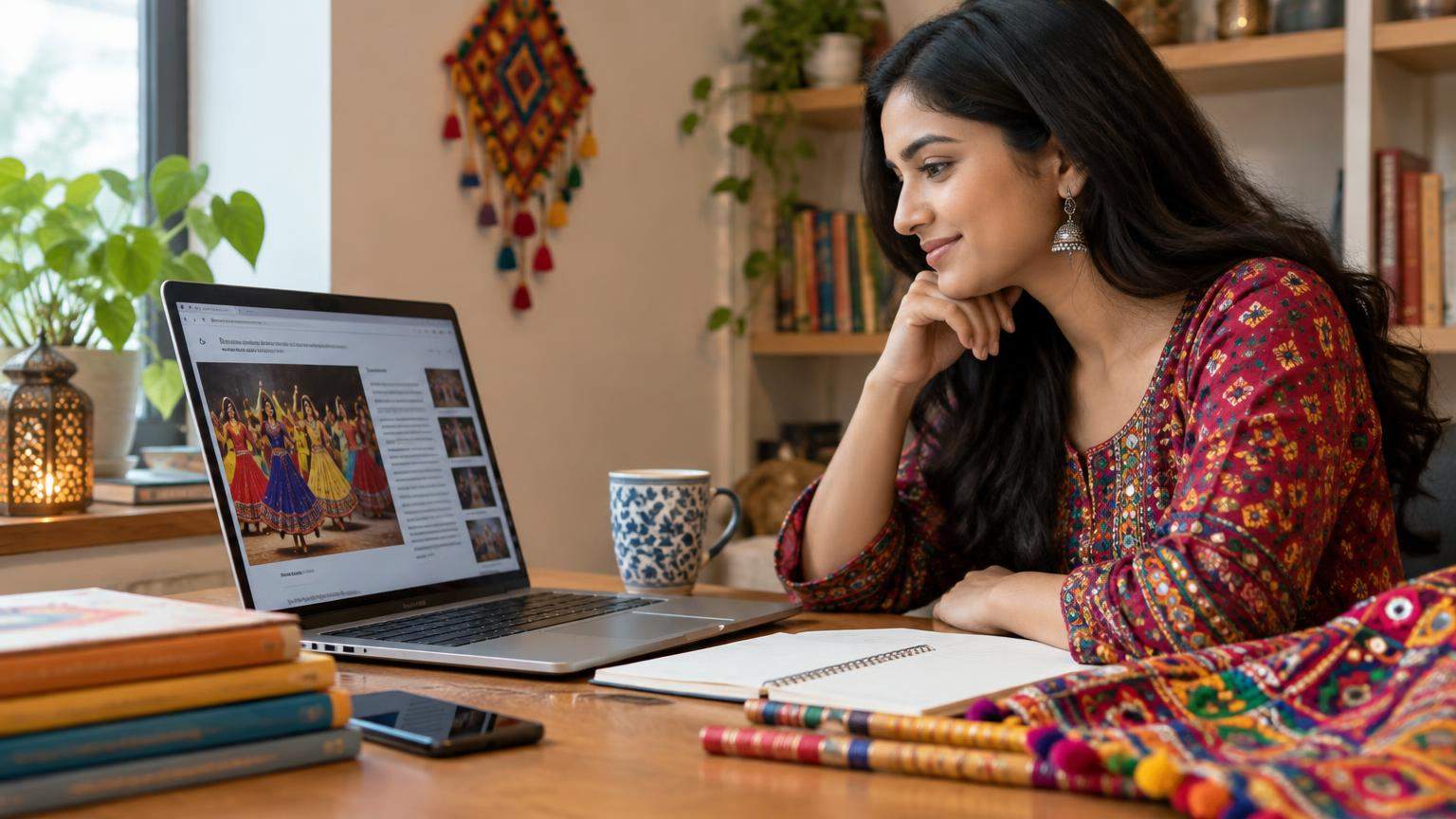
You do not need to be an expert dancer to enjoy Garba. Cultural documentation emphasises Garba as a participatory community dance. [1][10] Most beginners learn by watching and joining in.
Here are simple patterns you can practise at home. They are not the only versions used, but they will help you feel less lost.
Before you practise
- Clear a little space and wear comfortable shoes or go barefoot on a safe surface.
- Play a Garba song at a moderate tempo so you can feel the rhythm.
- Think in counts of 4, 6 or 8 – Garba often uses repeating rhythmic units.
Simple “two‑clap” Garba pattern (very basic)
This is a starter pattern built around side-steps and claps.
- Start facing the direction the circle moves (most often anticlockwise, but follow your event).
- Step to your right with your right foot.
- Bring your left foot next to your right.
- Step to your right again with your right foot.
- Bring your left foot in and clap twice at chest level.
Count it as: step (1), together (2), step (3), together + two claps (4‑and‑5). Then repeat, turning very slightly to your left so you slowly move around the circle.
Simple “three‑clap” Garba pattern
Another common beginner move is a three‑clap step:
- Step to your right with your right foot (1).
- Cross your left foot slightly behind or in front of your right (2).
- Step to the right again with your right foot (3).
- Bring your left foot in, then clap three times (4‑and‑5‑and‑6).
Keep your steps light and relaxed; your arms and claps should match the music. Once you are comfortable, add a small spin before or after the claps.
Very basic dandiya pattern
If your event includes dandiya raas, you may be in pairs, tapping sticks in time. A very simple pattern goes like this:
- Hold one stick in each hand.
- Step forward on your right foot as you tap your right-hand stick against your partner’s right-hand stick (1).
- Step forward on your left foot and tap left sticks (2).
- Step back on your right foot and tap both sticks downwards or on the ground (3).
- Step back on your left foot and tap both sticks together in front of you (4).
Classical descriptions of dandiya emphasise coordinated stick patterns and rhythmic stepping, but there is no single fixed beginner sequence. [5] Your organiser or local dance group may teach specific choreographies.
How to learn quickly on the night
- Start at the outer circle – Steps are simpler and people are more forgiving of mistakes.
- Watch one or two people ahead of you – Copy their feet and claps one beat behind until you catch up.
- Keep moving forward – Even if you miss a clap or spin, keep the basic walking motion so you do not cause a pile‑up.
- Step out gracefully when tired – Move towards the outside of the circle between sequences instead of stopping in place.
If you want to feel more confident before attending your first Navratri celebration, practise a few simple movements at home. Our Garba dance steps for beginners guide explains beginner-friendly footwork, clapping patterns, rhythm and common mistakes.
Circle etiquette and respecting customs
Garba is more than exercise; it is embedded in Gujarat’s devotional and community culture. [1][5] Good etiquette helps you fit in and keeps the energy joyful for everyone.
Joining and leaving the circle
- Join from the outside or end – Enter the circle from the outer edge and slip in at the back of a line or gap. Avoid cutting across the centre or forcing people to break their rhythm.
- Match direction and speed – All dancers in a ring move the same way. If one circle is too fast or advanced, step out and try a slower one.
- Do not suddenly stop in the flow – If you need a break, gradually drift towards the outer edge between patterns, then step out.
Personal space and contact
- Give people room to spin – Leave a little space on both sides of your body so neighbours can turn without collision.
- Mind your jewellery and dupatta – These should not hit others while you turn.
- Respect comfort levels – Hand‑holding or linking arms may be common in some groups and not in others. Follow the lead of your circle and avoid unwanted physical contact.
Respecting devotional elements
Garba is often danced around a lamp or an image of the goddess, which represents the constant divine presence at the centre of the changing world. [1][4]
Commonly appreciated courtesies include:
- Observe silence or soft conversation during aarti – Many events pause for prayers or devotional songs. Stand respectfully and follow what others are doing.
- Follow shoe rules near the shrine – In some venues, shoes are removed near the central altar; in others, only certain inner areas are shoe‑free. Look for signs or listen to announcements.
- Be mindful when taking photos – Avoid using flash in people’s faces during prayer, and check if the organiser has rules about photography around the deity.
Listening to organisers and volunteers
Because Garba is now celebrated in many settings, from village squares to international stadiums, practical rules vary widely. [7][8] You might encounter directions about:
- where to leave shoes or bags,
- how to queue for entry to the dance floor,
- which side to enter or exit the circles,
- when sticks are distributed or collected for dandiya.
Treat these instructions as the final word for that venue, even if you have seen different customs elsewhere.
Staying safe, hydrated and comfortable
Navratri nights can be long, loud and crowded. Official sources highlight the scale and enthusiasm of celebrations in Gujarat, which can involve very large gatherings. [2][7] A bit of planning helps you enjoy yourself while staying safe.
Hydration and pacing yourself
- Drink water regularly – Many people underestimate how much movement is involved. Sip water in breaks rather than waiting until you feel very thirsty.
- Know the venue’s food and drink rules – Some ticketed events allow only water inside; others have stalls or counters. Check in advance so you can plan meals.
- Take short breathers – Step out between songs to cool down, stretch or sit briefly, especially if you are not used to long periods of activity.
Managing personal belongings
- Carry only essentials – A small cross‑body bag or waist pouch that closes securely is often easier than a handbag or backpack in tight circles.
- Keep valuables minimal – Consider leaving expensive jewellery, large amounts of cash and unnecessary cards at home.
- Use any cloakroom or bag counters if provided – Some larger events may offer supervised areas for shoes or bags, but this is not universal. Always check the organiser’s information rather than assuming this service exists.
Crowds and movement
- Agree a meeting point – If you are in a group, pick a visible landmark in case you are separated.
- Follow flow patterns – Respect one‑way entries or exits from the dance area to avoid congestion.
- Move calmly in surges – During very popular songs or closing aarti, crowds may bunch up. Keep your footing, move with the flow and avoid pushing.
Health considerations
- If you have health conditions that limit exertion, discuss appropriate activity levels with a medical professional beforehand.
- Listen to your body: dizziness, chest discomfort or unusual shortness of breath are signs to stop dancing and seek help if needed.
- People with sensory sensitivities might want earplugs, as music can be loud.
Checklist before you go
Use this practical checklist to get ready. It offers general guidance; always confirm details with your specific event’s organiser.
One or two days before
- Confirm date, time and location from the official event page or ticket.
- Check for any dress code, shoe rules or ID requirements.
- Read the bag policy – some venues restrict large bags or outside food.
- Find out whether dandiya sticks are provided, sold on site or expected to be brought from home.
- Practise a simple Garba step or two so your body recognises the rhythm.
What to wear and carry
- Choose comfortable, modest clothing you can move in; chaniya choli or kediyu are festive examples, not obligations. [6][9]
- Pick secure, low‑heel footwear unless your venue specifies bare feet.
- Secure your dupatta or scarf with pins.
- Pack a small bag with: ticket/QR code, ID, some cash/card, phone, key, and any necessary medication.
- Bring a water bottle if allowed, or budget for buying water at the venue.
On arrival
- Note the entrances, exits and restrooms.
- Look for any posted rules about shoes, bags, photography and circles.
- Observe the flow of the dance for a few minutes before joining.
- Start in the outer circle and match your pace to the group.
Frequently Asked Questions
Do I have to be Gujarati or Hindu to attend Garba?
Cultural documentation notes that Garba is celebrated across India and in many parts of the world where Gujarati and other Indian communities live, with broad community participation. [8][10] Most public or community events welcome people from different backgrounds, but a particular organiser may run a members‑only or invitation‑only night. Check the event description for any restrictions.
Is traditional dress like chaniya choli or kediyu compulsory?
No universal rule requires these outfits. Cultural and tourism descriptions highlight them as typical Garba clothing, but contemporary guides present them as popular options rather than strict requirements. [2][6][9] Many attendees wear kurtas with trousers or skirts, or other modest, movement‑friendly clothes, especially where access to traditional garments is limited.
Can I wear Western clothes to Garba?
In many community and diaspora events, people mix Western and Indian styles, such as a flowing skirt with a simple top or a shirt with comfortable trousers. [9] The main expectations are modesty, respect for the devotional setting and practicality for dancing. Some religious venues may be more traditional in dress expectations, so always check the organiser’s guidance.
Should I dance barefoot or with shoes?
Practices differ. In some temple or shrine settings, people dance barefoot near the sacred space, while large grounds and urban halls often see dancers in shoes or sandals. [9] Follow any posted venue rules or instructions from organisers. If footwear is allowed, secure, low‑heel shoes are usually the safest choice for long sessions.
What if I do not know the steps at all?
Garba is a social, participatory dance, and beginners are common. [1][10] Start at the outer circle, watch the feet of people ahead of you and copy the basic side‑steps and claps. Focus on staying in time and moving forward with the group. Most circles are happy to have enthusiastic learners as long as you do not block or push.
Are children allowed at Garba nights?
Children often participate in Navratri celebrations, especially at community or early‑evening events, but age limits and supervision requirements are set by each organiser and venue. Some late‑night, highly crowded or ticketed events may have specific rules. Consult the event’s official information for details.
How do I buy or carry dandiya sticks?
There is no single rule. Some organisers provide sticks as part of the ticket, some sell them inside, and some expect you to bring your own. [7] Because sharp or heavy sticks can be hazardous in crowds, organisers may specify type or material. Always check the event page and security guidelines.
Disclaimer
This guide offers general cultural background and practical suggestions for enjoying a Navratri Garba night as a beginner, based on reputable cultural and tourism sources and widely observed practices. [1][2][8] Specific rules on dress, footwear, tickets, age limits, timings, safety measures and photography are set by individual organisers and venues and may change from year to year. Always rely on the current official information for the event you plan to attend, and consult relevant professionals for any personal health or safety concerns.
Sources and Further Reading
Primary and supporting references. Verify time-sensitive information at the original publisher.
- Garba Of Gujarat — indiaich-sna.in
- Navratri — kheda.nic.in
- Navaratri — en.wikipedia.org
- All You Need To Know About The Dance Form Garba — www.aurva.world
- Culture Of Gujarat — en.wikipedia.org
- What To Wear Garba Chaniya Choli Kediyu Style Guide — www.rameelo.com
- Festivals 6 — gujarattourism.com
- 16479735985428 — www.sangeetnatak.gov.in
- Garba Dress Guide Chaniya Choli Kediyu Jewellery — hindutone.com
- Garba — cultureatlas.in
Research date: October 19, 2026 (UTC). Links may change.