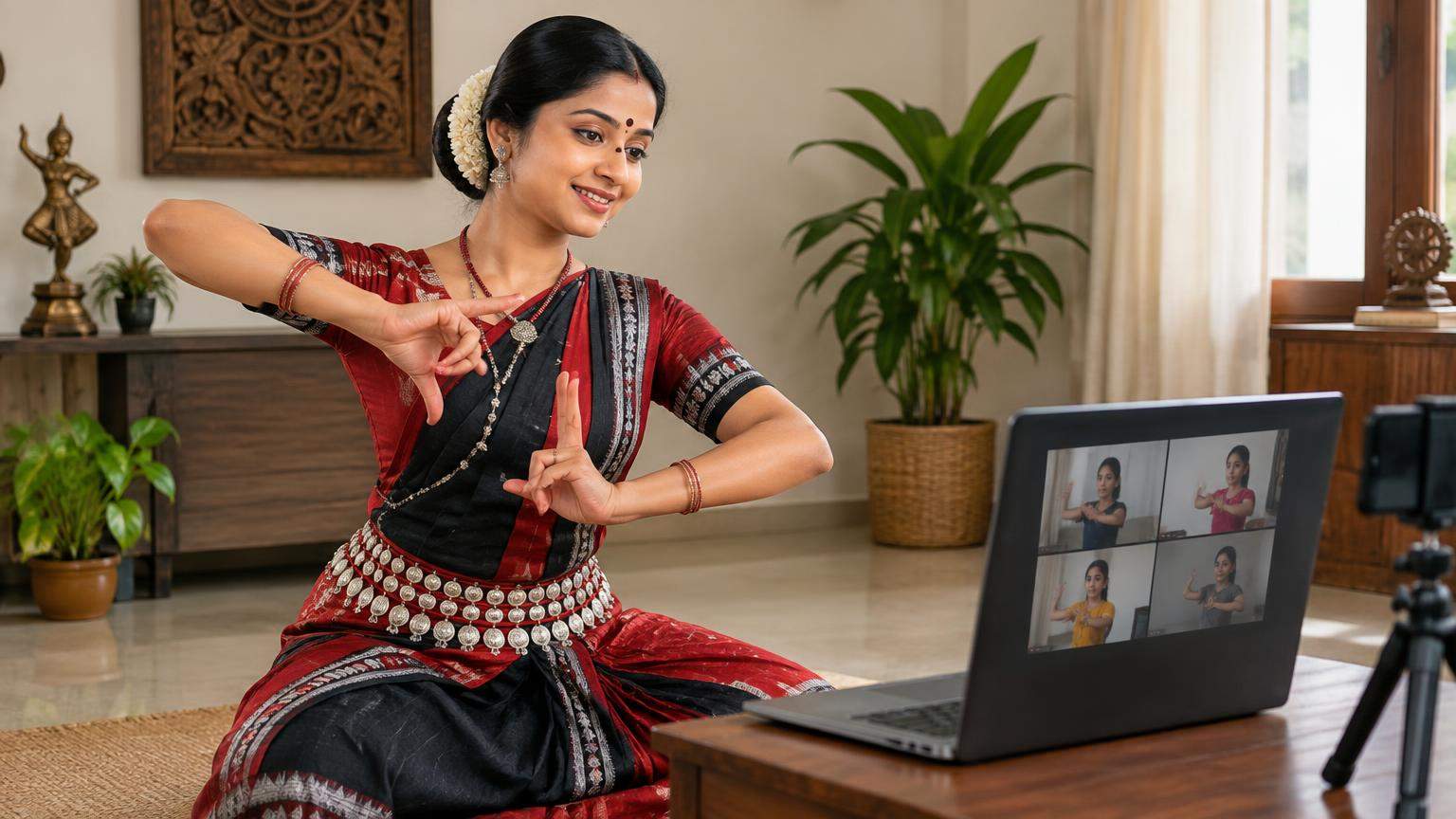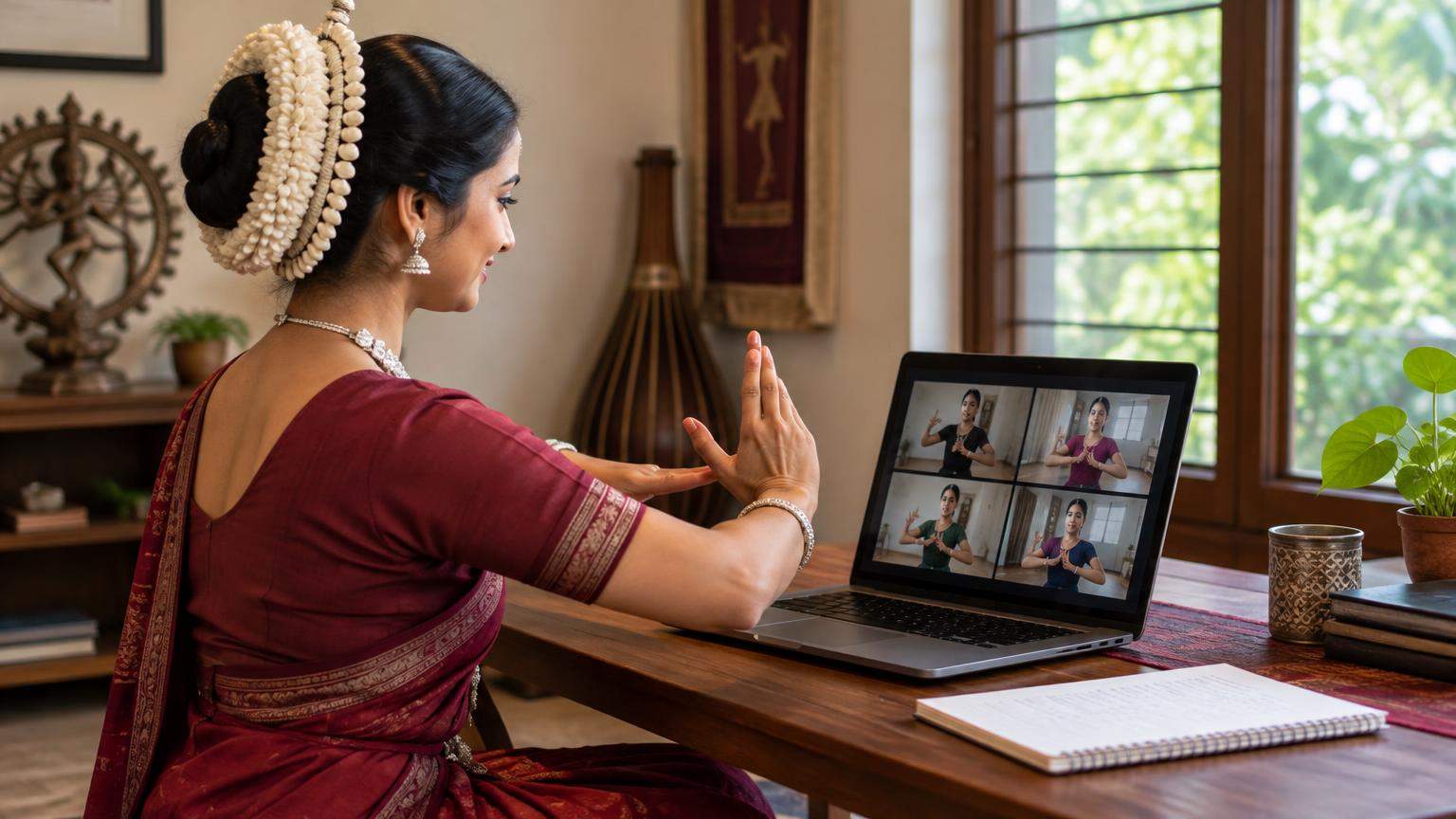

Freelance dance teaching platforms can be a real bridge between Odia and Odissi teachers and students across India and abroad, but the landscape is messy if you are not sure where to list yourself or what each site is really good for. In this guide, we’ll look at the main options that actually list Indian classical and folk styles, how they work in practice, and how an Odissi or Odia folk teacher can combine them with their own brand to build a steady stream of students.
1. Why online marketplaces matter for independent Odissi teachers
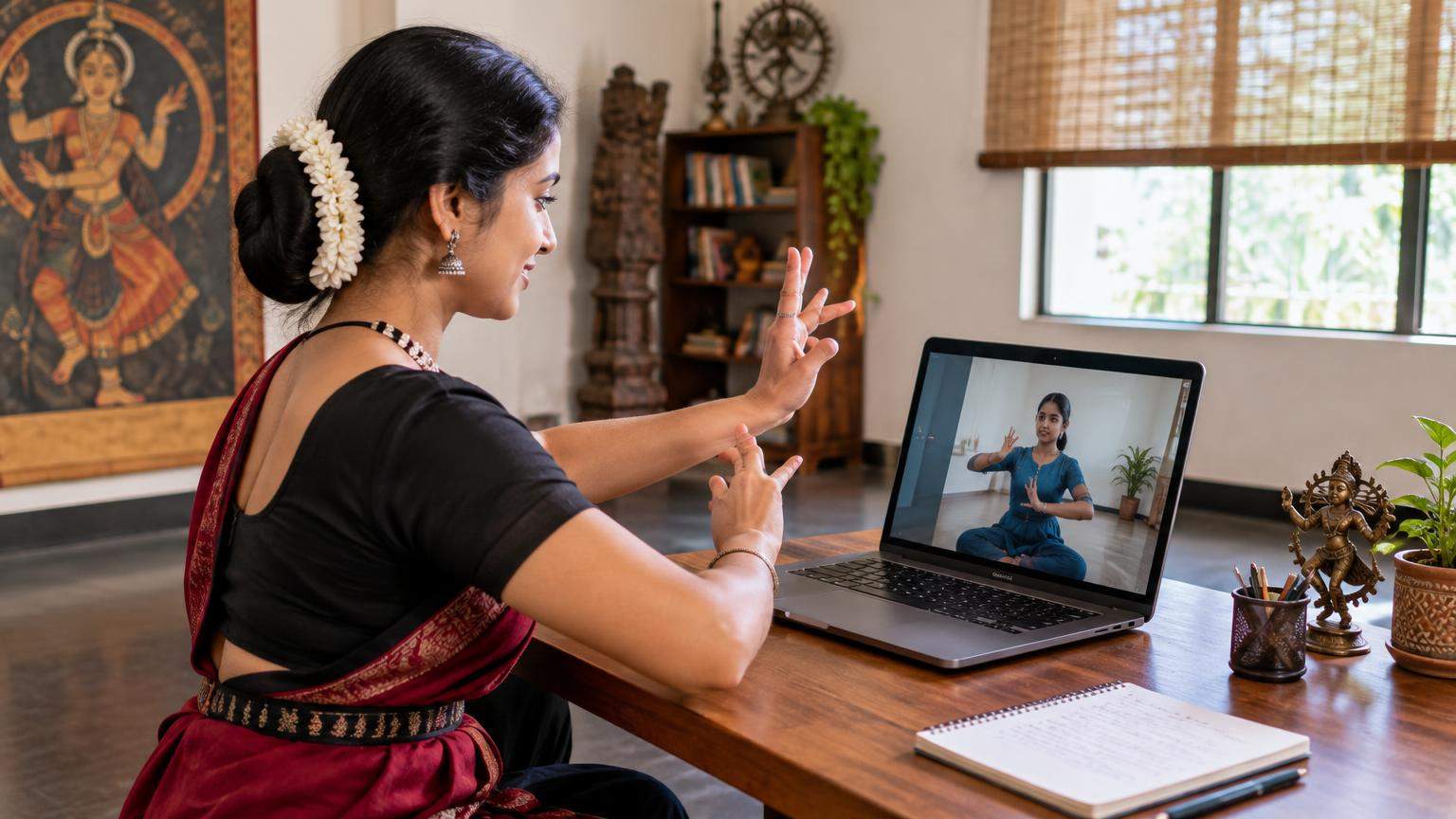
For an independent Odissi or Odia folk teacher, three big problems usually block growth:
- Your core audience may live outside your city or even outside India.
- Local parents and adults may not even know that online Odissi exists as an option.
- You may be unsure how to handle marketing, payments and scheduling on your own.
Online tutoring and freelance marketplaces solve at least part of this. Platforms like UrbanPro and Superprof already list hundreds of online dance tutors in India, across classical and folk styles, and allow students to filter by subject, mode (online/offline), and level. [1][2][3]
India-focused tutor connectors such as Find My Guru explicitly present online classical dance as a normal tuition category and even highlight scenarios like “a student in a smaller town learning Odissi from a Bhubaneswar-trained teacher” through live online classes. [5] This is exactly the situation many Odissi teachers want to reach.
For Odia teachers and Odissi gurus, freelance dance teaching platforms can therefore be used in three main ways:
- Lead generation – finding first-time students who would never discover you otherwise.
- Reputation building – collecting public reviews and ratings that reassure new learners.
- Experimentation – testing new formats (short workshops, kids’ batches, NRIs’ weekend classes) without building full infrastructure from day one.
The key is to understand which type of platform you are using and what role it should play in your teaching career.
2. Types of freelance dance teaching platforms available in India
Broadly, an Odissi or Odia folk teacher in India will encounter four kinds of platforms:
- General tutoring marketplaces
- Global tutor/creator platforms
- Studio networks and kids’ activity portals
- Generic freelance / job-listing sites
Each type has its strengths and limitations.
2.1 General tutoring marketplaces (India-first)
These are Indian platforms built primarily for tutors and institutes.
- UrbanPro describes itself as “India’s largest network of most trusted tutors and institutes” across 1,000+ subjects, including dance and hobby classes. [1] The platform explicitly encourages tutors to sign up, connect with learners and grow their tutoring business, and it offers both online and in-person modes. [1][2]
- Find My Guru focuses on connecting Indian students with tutors. Its page for online classical dance tutors mentions that students can learn styles like Odissi online from teachers in other cities and recommends trial classes to gauge fit. [5]
These sites are strong choices if your main goal is regular one‑to‑one or small‑group classes with Indian students.
2.2 Global tutor marketplaces
Global platforms let individual teachers create profiles and attract students from many countries.
- Superprof India runs a dedicated section for online dance classes with filters for Bollywood, Indian Dance, Folk Dance and classical styles. [3] Profiles show hourly rates, a short bio, reviews and often a “first lesson free” offer, which has become a norm there.
Superprof is useful if you are comfortable teaching across time zones and in English or Hindi as well as Odia.
2.3 Studio networks and kids’ activity portals
These are not freelancer marketplaces, but they matter because they generate demand for Odissi and related forms.
- OdissiOnline (Srijati Arts) offers live, interactive Odissi classes delivered online and highlights that it has taught Odissi virtually since 2010 to students in multiple countries. [7]
- KumKum NrityaBhumika runs structured online Odissi programmes with recordings and formal batches, positioning itself as an Odissi school that happens to teach online. [8]
- Taabur is a children’s activity booking site; a listing for Sanskrit Dance Music Academy offers Odissi classes for kids in Delhi NCR and Chandigarh, with online, offline and home options. [9]
From a teacher’s perspective, you usually work for or with the academy rather than directly through these portals. They are useful if you want employment or contract work inside an established brand, especially with children.
2.4 General freelance and job-listing sites
Some platforms are broad gig or job boards that happen to list dance.
- Rockerstop presents itself as a freelancing platform in India and includes “Dance Training / Teacher” among several categories like data entry and lead generation on its freelance-jobs page. [6]
Rockerstop appears to function more like a lead board where clients and freelancers connect than as a full tutoring system; publicly visible information about its payment flows, fees and dispute handling is limited, so you need extra caution. [6]
3. Deep dive: Key platforms where Odissi and Odia styles actually show up
This section focuses on platforms that demonstrably support classical and Indian dance forms, including Odissi.
3.1 UrbanPro: Large Indian tutor network with dance as a core subject
UrbanPro is one of the most visible choices for Indian dance tutors.
What’s relevant for Odissi and Odia teachers:
- The online dance classes section lists multiple Indian dance styles and explicitly mentions learning Odissi online under trainer guidance. [2]
- The site promotes itself as a place where tutors and institutes can connect with learners and manage their tutoring business at scale. [1]
- There is a dedicated tutor app (“UrbanPro for Tutors”) on Google Play, described as India’s top learning marketplace app helping tutors connect with thousands of students across categories like dance, music and languages. [10]
Implications for you:
- You can list Odissi, Sambalpuri folk, or other Odia dance forms as explicit subjects, making it easier for serious students to find you.
- UrbanPro’s scale means more competition, but also a larger pool of learners searching specifically for online Indian classical dance. [1][2]
Potential limitations:
- Commission, per‑lead cost or subscription details are not clearly displayed on the public marketing pages crawled for this research, so you must check the latest tutor terms and pricing once logged in. [1]
3.2 Superprof India: Global marketplace with strong profiles
Superprof’s dance category showcases how a polished profile can attract students.
Visible advantages for Odissi/Odia teachers:
- Dance is clearly treated as a mainstream subject with sub‑filters such as Bollywood, Indian Dance and Folk Dance. [3]
- Profiles highlight:
- An attention‑grabbing title (e.g., style + level + unique angle)
- Hourly pricing
- Ratings and student reviews
- A short, persuasive description of experience and teaching approach [3]
- Many tutors offer the first lesson free, which lowers the barrier for students to try a niche style such as Odissi. [3]
Things to consider:
- Superprof’s public pages for India do not fully spell out how platform fees or subscriptions work; in some countries, charges apply to students rather than tutors, but you should verify current India‑specific terms instead of assuming. [3]
- Because it serves a global audience, you may receive inquiries from students in different time zones; set your availability and communication expectations clearly.
3.3 Find My Guru: India‑centric connector that understands classical dance
Find My Guru is smaller than UrbanPro or Superprof but has content that speaks directly to classical dance tutors.
- Its page for online classical dance tutors explains how online classes allow students in small towns to learn Odissi from trained teachers in cities like Bhubaneswar. [5]
- The site advises students to book a trial class before committing, reinforcing a practice you can adopt: short, lower‑risk initial sessions to build trust. [5]
- A separate comparison article suggests that, in general, open tutor marketplaces like UrbanPro and Superprof allow teachers to retain a larger share of their fees than big coaching companies that assign students, though this is editorial commentary rather than official pricing data. [4]
For Odissi and Odia folk teachers, Find My Guru can be one more funnel for serious, culture‑oriented learners, especially within India.
3.4 Studio networks and academies: OdissiOnline, KumKum NrityaBhumika and Taabur
While not open marketplaces, these options show what long‑term online Odissi offerings can look like.
- OdissiOnline emphasises that it has taught Odissi online since 2010 and offers live interactive classes with individual guidance. [7]
- KumKum NrityaBhumika presents structured online Odissi programmes and multi‑month workshops, often with recordings. [8]
- Taabur hosts listings such as Sanskrit Dance Music Academy, which offers Odissi classes to children both online and offline in Delhi NCR and nearby regions. [9]
These examples are useful benchmarks if you eventually want to build your own branded school or collaborate with an academy that already has marketing and admissions in place.
3.5 Rockerstop: A general freelance board listing dance teachers
Rockerstop’s freelance jobs page groups “Dance Training / Teacher” with many other freelance categories, suggesting that clients can post dance‑related gigs and freelancers can respond. [6]
For an Odissi teacher, this could mean occasional opportunities such as:
- Choreography for a short event
- Short‑term offline workshops
- One‑off performance‑prep coaching
However, because the public pages provide limited information on payment methods, fees and dispute resolution, Rockerstop should be treated as experimental and used only after you personally review its current terms and evaluate any client carefully. [6]
4. Comparing major freelance dance teaching platforms
The table below summarises key differences based on what is visible publicly. It is not exhaustive and you should always confirm current details on each platform.
| Platform | Core type | Dance / Odissi visibility | Typical use case for Odissi/Odia teachers |
|---|---|---|---|
| UrbanPro | India-focused tutor marketplace | Dedicated online dance section; Odissi mentioned as learnable online style. [2] | Build a steady base of Indian students for 1:1 or small-group online Odissi / Odia folk classes. |
| Superprof India | Global tutor marketplace | Dance category with Indian and folk styles; strong profiles with reviews and pricing. [3] | Attract India and overseas students; highlight niche style and credentials; use “first lesson free” convention. |
| Find My Guru | India-centric tutor connector | Online classical dance page describes cross-city Odissi learning. [5] | Reach classical-arts-focused students; use suggested trial classes to convert serious learners. |
| Taabur | Kids’ activity portal | Lists academies such as Sanskrit Dance Music Academy offering Odissi classes for kids. [9] | Teach Odissi to children through an academy in metros, often as a contracted instructor. |
| Rockerstop | Generic freelance/job board | Has a “Dance Training / Teacher” job category among many others. [6] | Occasional gigs or leads; requires higher due diligence on terms, payments and client legitimacy. |
5. How to evaluate a platform: fees, lead quality and safety
Before committing time and energy to any site, evaluate it on the following dimensions.
5.1 Fees and earning potential
Because precise commission percentages and subscription prices are often hidden behind logins or change frequently, you should treat any numbers shared in forums with caution and instead:
- Check the latest tutor pricing or terms page once you sign up.
- Note whether the platform charges:
- Per lead (you pay when you contact a student)
- Per month / year (subscription)
- As a commission from each booking
- Compare this with editorial commentary such as Find My Guru’s observation that open marketplaces like UrbanPro and Superprof can allow tutors to keep a larger share than fully managed coaching companies, while remembering that this is an opinion, not official platform data. [4]
Calculate an approximate “effective hourly rate” after fees and preparation time rather than just looking at the sticker price you list.
5.2 Lead quality and fit for your style
Ask yourself:
- Does the platform explicitly list Indian classical or Odissi as a category? UrbanPro and Find My Guru do, and Superprof allows similar tagging through its dance filters. [2][3][5]
- Are most students searching for exam help and academics (for example on major ed‑tech companies), or do you see clearly labelled dance and hobby categories?
- Are there visible profiles of other classical dance teachers with reviews? If yes, you know students on the site are open to long‑term arts learning.
5.3 Payment security and support
Since official escrow and dispute policies for dance tutors are not detailed in the sources used here, follow general safety checks:
- Prefer platforms that describe how and when tutors are paid, even if you need to log in to access that information.
- Avoid arrangements where a student insists on paying entirely outside the platform’s recommended channels before any relationship is built.
- Look for visible support channels (help centre, contact email or phone) rather than anonymous sites with no clear owner.
If any platform fails these basic tests, use it only for low‑risk experiments or avoid it.
5.4 Privacy and personal safety
Particularly important for women tutors and for home‑based classes:
- Check how much of your phone, email and address is visible to the public.
- Use in‑platform messaging until you are comfortable with the student and have at least one paid session completed.
- Avoid sharing personal social media accounts with students until you decide it serves your brand strategy.
6. Building a high‑converting profile and demo reel for Odissi/Odia styles
Whether you are on UrbanPro, Superprof or another site, your main tools are your profile and your first interaction with a potential student.
6.1 Profile basics that matter on tutor marketplaces
Looking at high‑ranking tutor profiles on Superprof and UrbanPro’s dance pages, a few patterns stand out. [2][3]
Use them as a checklist:
- Specific headline
Instead of “Dance Teacher,” try:
- “Odissi dance teacher – beginner to intermediate – Bhubaneswar / online”
- “Odia Sambalpuri folk dance for kids – online weekend batches”
- Clear style tags
Make sure your profile is correctly classified under dance → Odissi / Classical / Folk, so relevant filters pick you up. [2][3][5]
- Short, strong bio
In 4–6 lines:
- Mention your training lineage (for example, gurus or institutions if you are comfortable sharing them).
- Include formal credentials (diplomas, Visharad-level studies, scholarships) if applicable.
- State how many years you have been teaching.
- Name your target students (kids, adults, NRIs, complete beginners, performers).
- Offer a trial class
Superprof profiles often highlight a free first class, and Find My Guru recommends trial classes before committing. [3][5] You can:
- Offer a free or discounted 30–45‑minute introduction.
- Use that time to assess the student and explain expectations.
- Reviews and testimonials
Encourage happy students to leave platform reviews. Superprof and UrbanPro both surface ratings prominently, which can heavily influence new students’ decisions. [2][3]
6.2 Creating an effective demo reel
Many platforms allow you to upload photos and sometimes link to external videos. Even where it’s not required, a short reel can set you apart.
Guidelines for an Odissi/Odia dance demo:
- Length: 60–120 seconds.
- Content: Mix a short pure dance segment (nritta) with one expressive abhinaya passage, or showcase a simple Odia folk routine if that is your focus.
- Camera and space:
- Shoot in natural light where your full body is visible.
- Keep the background uncluttered, ideally with a neutral wall.
- Audio: Use clear, legal music sources. If you use recorded Odissi tracks, be mindful of copyright and avoid uploading full items publicly without permission.
- Intro: Consider a brief spoken intro (“Namaskar, I am … I teach online Odissi classes for beginners in India and abroad”) before you start dancing.
Upload or link this reel on every platform profile and on your own social channels.
6.3 Tailoring offers for different student segments
On most marketplaces you can list different class types or explain them in your description:
- Kids (6–12 years) – Fun introduction to basic postures, simple choreographies to Odia devotional or folk songs, focus on rhythm and enjoyment.
- Youth and adults (13+) – Technique, repertoire items, theory (tala, raga, history), fitness and flexibility.
- NRI Odias – Weekend batches timed for US/Europe, possible Odia language integration and cultural context.
- Performance coaching – Short‑term packages for students preparing for a show or exam.
Clearly labeling these options on platforms like UrbanPro or Superprof can help students self‑select the right option. [2][3]
7. Safety and scam checks for online dance teaching jobs
Because some platforms function more as open boards than curated marketplaces, be conservative about safety.
7.1 Red flags when responding to job posts
On generic freelance sites and open boards, watch out for clients who:
- Offer unusually high payments for very vague work.
- Ask for several unpaid “sample” classes beyond a standard short trial.
- Push you to move to a private messaging app immediately and avoid all platform communication.
- Insist on payment methods with no trace (unverified wallets, gift cards) or request money from you upfront “to confirm booking.”
If any of these appear, decline politely and move on.
7.2 Basic online working hygiene
- For the first few sessions, teach from a shared or neutral part of your home rather than revealing your full living space.
- Avoid sharing personal documents (ID cards, bank statements) with students. Platforms should only require this during tutor verification, and even then, check that you’re on the official domain.
- When teaching children, insist that a parent or guardian is aware of the classes, and follow local guidelines or your own ethical code for appropriate communication.
7.3 Contracts and written agreements
For long‑term arrangements (for example, a school bringing you on as a freelance Odissi teacher):
- Request a simple written agreement that covers schedule, pay rate, payment frequency, cancellation rules, and who owns recordings of classes if they are made.
- Clarify whether you are allowed to teach your own external students or perform outside; some academies have exclusivity or branding expectations.
8. Balancing platform work with your own Odissi brand
Marketplaces are excellent for discovery, but long‑term stability often comes from your own brand, as established online Odissi schools demonstrate.
8.1 Learn from existing online Odissi schools
OdissiOnline and KumKum NrityaBhumika both show what a mature online Odissi offering can look like: clear programmes, defined durations, and a direct relationship with students through their own websites. [7][8]
Even if you are not ready to run an academy, you can borrow ideas:
- Design named courses (e.g., “Odissi Basics – 3‑Month Foundation,” “Sambalpuri Folk for Children – 8 Weeks”).
- Use simple tools (Google Forms, WhatsApp Business, a basic website) to manage direct enrolments over time.
If you want to build your own teaching business instead of depending entirely on freelance platforms, read our guide on how to start online Odia dance classes in India. It covers equipment, course planning, class fees, payments and student enrollment.
8.2 Using platforms as lead funnels
Think of freelance dance teaching platforms as the top of your funnel:
- Discovery: Students first meet you on UrbanPro, Superprof or Find My Guru. [1][3][5]
- Trust‑building: You deliver excellent trial and early classes and collect platform reviews.
- Long‑term relationship: Once students are stable and loyal, you can invite them to structured programmes you run directly (online intensives, offline workshops in Odisha, etc.), in line with platform rules.
Always check each site’s policy on moving students off‑platform; some explicitly restrict this, while others focus mainly on their own booking fees.
8.3 Simple brand‑building steps while you freelance
Parallel to your platform presence, gradually build:
- A consistent teaching name and logo (even just your own name in Odia calligraphy).
- A basic website or at least a Linktree‑style page with your profiles, demo reel and contact.
- Social media channels where you occasionally share short educational content (mudras, snippets of repertoire, Odia song meanings), not just promotions.
This makes you less dependent on any single platform over time.
9. 30‑day experiment: Shortlist platforms and start testing
Instead of over‑planning, commit to a focused 30‑day experiment.
9.1 Step 1: Choose 2–3 core platforms
For an Odissi or Odia folk teacher in India, a practical starting mix could be:
- UrbanPro (India‑centric, strong dance presence). [1][2]
- Superprof India (global audience, strong profiles). [3]
- Find My Guru (additional leads for classical dance). [5]
Optionally, you can add a kids’ portal like Taabur if you want academy‑based children’s work in relevant cities, or cautiously test Rockerstop for one‑off gigs after verifying its current conditions. [6][9]
9.2 Step 2: Upgrade your profiles (Week 1)
During the first week:
- Write/refine your profile headline and bio.
- Upload a clean photo in practice or performance attire.
- Add your demo reel link.
- Decide on your standard offerings and trial‑class policy.
9.3 Step 3: Engage actively (Weeks 2–3)
For the next two weeks:
- Respond to every serious inquiry within 12–24 hours.
- Propose a short video call or messaging exchange to clarify goals before the first class.
- Keep notes on each student’s background and expectations.
9.4 Step 4: Measure results and refine (Week 4)
At the end of 30 days, review:
- Number of inquiries from each platform.
- Number of paid trial classes booked.
- Number of students who continued after the trial.
- Time spent on messages and administration.
Then decide:
- Which one or two platforms deserve more effort.
- Whether pricing, profile text or demo reel need adjustment.
- What kind of direct offerings (courses, workshops) you might start designing based on actual demand.
Frequently Asked Questions
Can I realistically find Odissi students online in India, or is it only for Bollywood?
Yes, there is real demand for Indian classical forms, including Odissi, on tutor marketplaces. UrbanPro’s online dance section mentions Odissi as a style that can be learned online, and Find My Guru’s classical dance page uses Odissi as an example of cross‑city online learning. [2][5]
Which platform is best for a complete beginner Odissi teacher with little experience?
For beginners, a large India‑focused site like UrbanPro or a profile‑driven site like Superprof is often easier to start with, because they already have many students browsing for dance. [1][2][3] Start with small batches, set realistic pricing and focus on building reviews.
Can I list on multiple platforms at the same time?
In most cases, yes. None of the sources used here suggest that UrbanPro, Superprof or Find My Guru require exclusivity for dance tutors. [1][3][5] However, always read the current terms and conditions for each site and avoid copying and pasting identical promotional messages in ways that might be treated as spam.
How should I set my pricing if I am new to online teaching?
Browse existing Odissi and Indian classical dance profiles in your city on UrbanPro and Superprof to see common hourly or per‑class rates. [2][3] Start slightly below established senior teachers but not so low that students doubt your quality, and review your rates every few months based on demand and feedback.
Are platforms like Rockerstop safe for dance teachers?
Rockerstop lists “Dance Training / Teacher” among its freelance job categories, but its public pages provide limited information about payment protection and dispute resolution. [6] Treat it as a supplementary source of leads, do your own due diligence for each client, and avoid any arrangement that asks for upfront payments from you or relies entirely on off‑platform communication.
Disclaimer
This article provides general guidance on freelance dance teaching platforms and related earning opportunities for Odissi and Odia dance teachers in India. Platform features, fees, policies and legal terms change over time and may differ from what is visible on public pages at the time of writing. Always review the latest official information on each platform, read the full terms and conditions carefully, and consider seeking professional legal or financial advice before entering into contracts or relying on any single platform for income.
Sources and Further Reading
Primary and supporting references. Verify time-sensitive information at the original publisher.
- Source Document — www.urbanpro.com
- Online Dance Classes — www.urbanpro.com
- Online — www.superprof.co.in
- Tutoring Platform Has Lowest Fees In India — www.findmyguru.com
- Classical Dance Tutors In Online — www.findmyguru.com
- Freelance Job — www.rockerstop.com
- Source Document — www.odissionline.com
- Source Document — www.kumkumnrityabhumika.com
- Sanskrit Dance Music Academy — taabur.com
- Details — play.google.com
Research date: October 18, 2026 (UTC). Links may change.