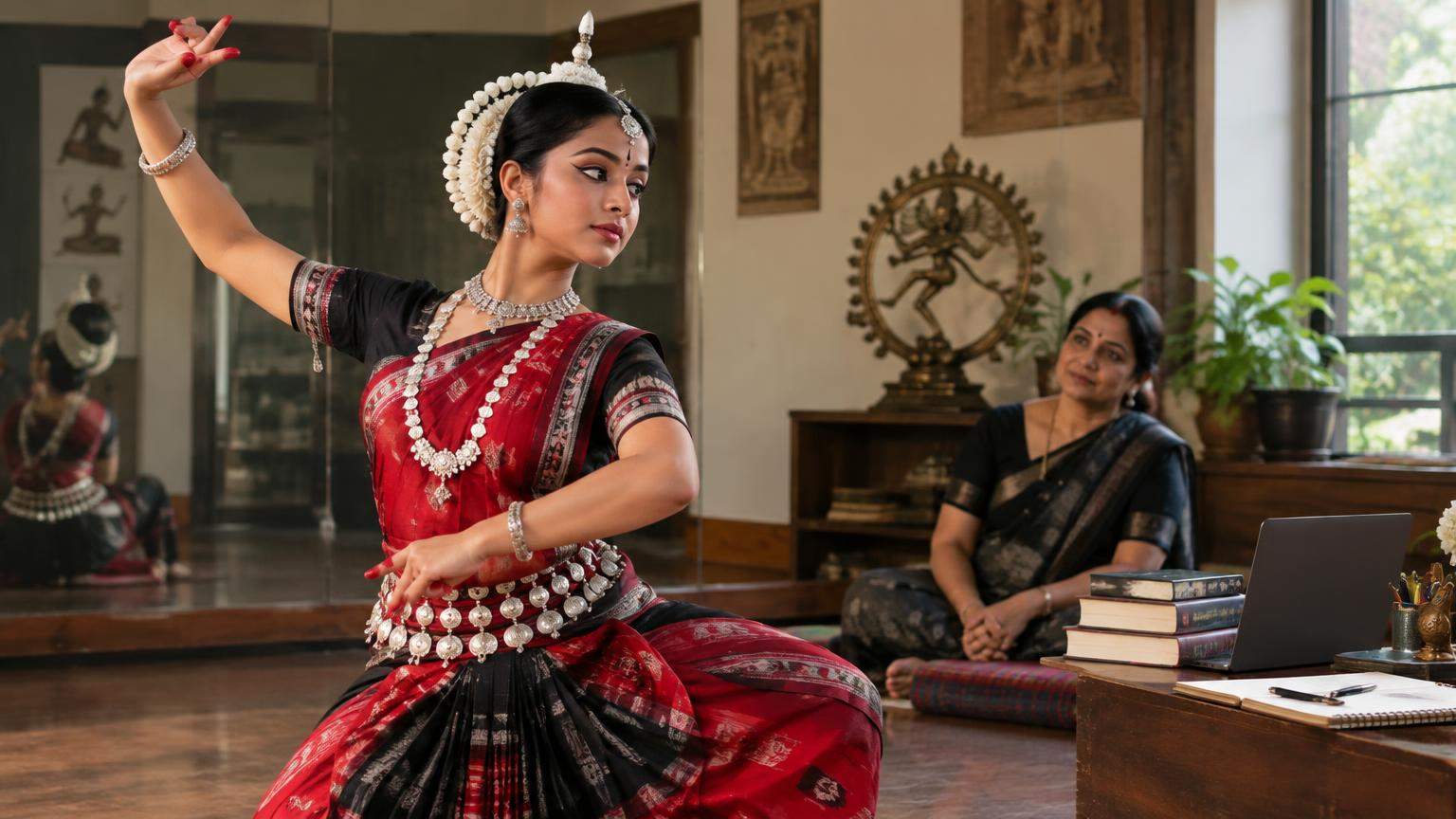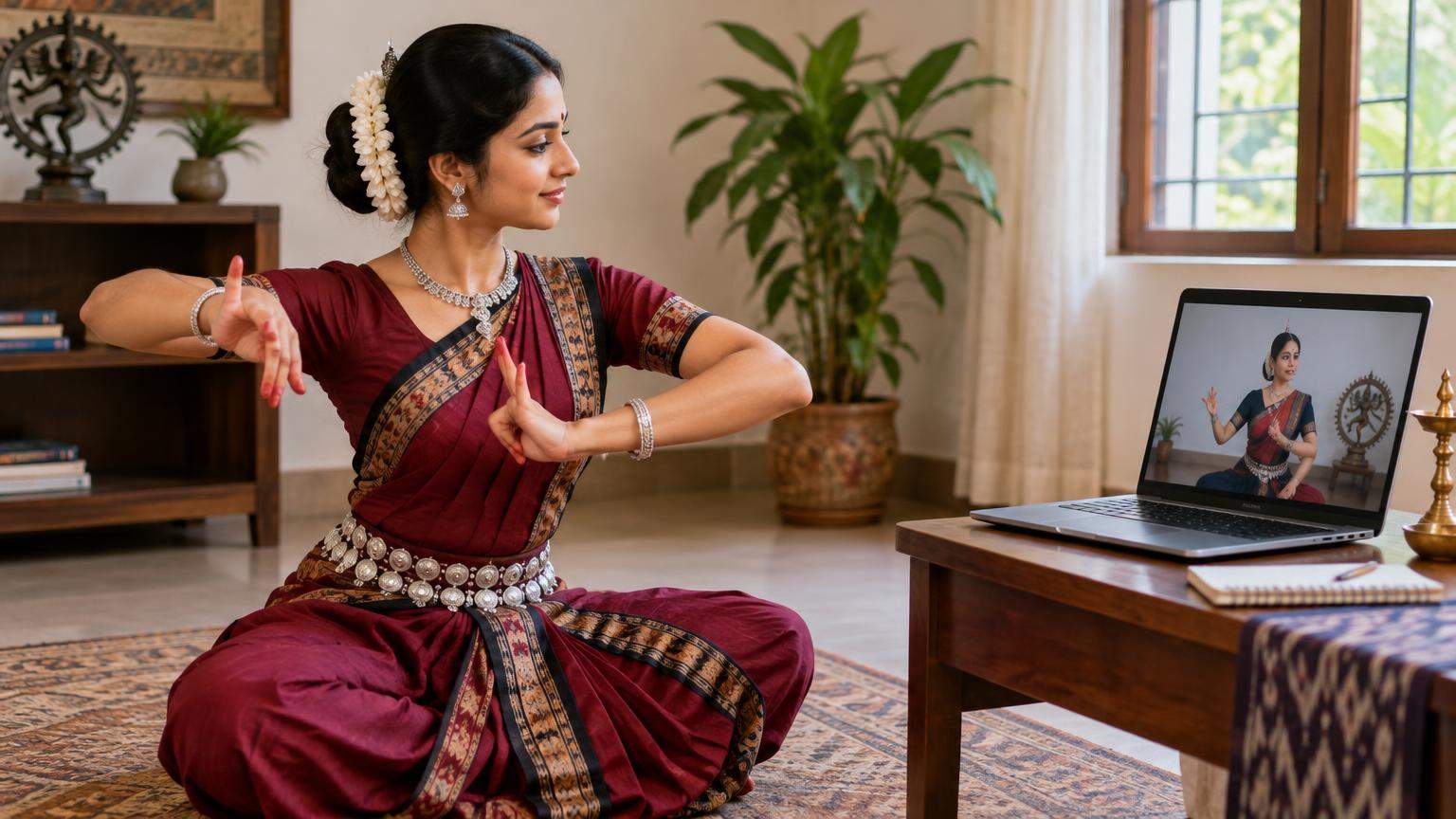

Online Odissi classes have moved from being an emergency option to a serious long‑term path for students in India and abroad, but choosing the right school, fees, and schedule in 2026 still takes careful thought. This guide walks you through how to compare online Odissi programmes, what fees really mean, how international time zones affect your practice, and how to judge whether a guru or school is genuinely right for your goals.
1. Who This Guide Is For: Hobby Learners vs Serious Odissi Students
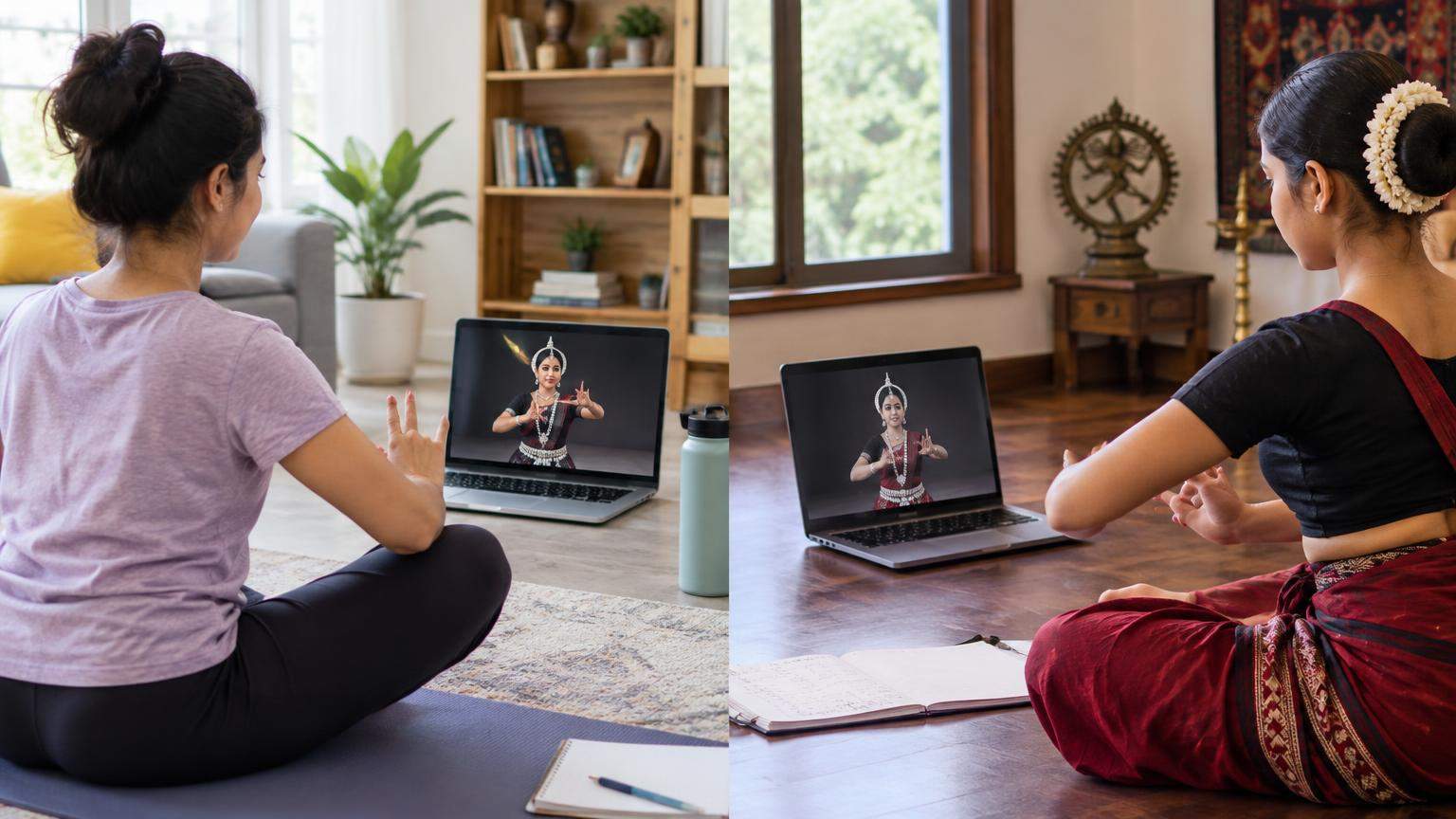
Before you compare any school, be honest about why you want to learn Odissi and how deeply you want to commit. Most online Odissi classes fall into two broad tracks, often offered by the same institution.
Hobby learners
Some academies explicitly describe “hobby learning programs” or casual batches designed for flexible, low‑pressure learning. Odissi Lessons Online, for example, presents online Odissi along with other arts as part of broader hobby‑oriented training, emphasising ease of access and low‑cost lessons for global students. [1][4]
You are likely in the hobby category if you:
- Want to reconnect with Odia or Indian culture without exams.
- Can realistically spare only 1–2 hours per week, with some breaks.
- Are not focused on professional performance or formal degrees.
Serious or long‑term students
Other programmes are clearly aimed at systematic, multi‑year training. Symbiosis Dance & Music, for example, offers a live online Odissi diploma (Visharad) as a 5‑year course, with monthly fees and a structured syllabus comparable to a performing arts degree. [5] This kind of programme is designed for students who are willing to commit to regular riyaaz, assessments, and gradual progression through the traditional repertoire.
You are likely a serious learner if you:
- Want to perform traditional items properly, not just learn standalone choreographies.
- Care about guru lineage, exams, and possibly certification.
- Can commit to at least 2–4 hours of practice a week plus classes.
Your first decision is whether you want a hobby‑style or a structured, exam‑oriented path. Many schools cater to both—so be clear which track you are enquiring about.
If your long-term goal is to develop a professional identity as a dancer, our guide on turning Odia dance skills into a personal brand or business offers additional ideas about sharing your work, building an audience and exploring dance-related opportunities.
2. Types of Online Odissi Classes in 2026
Most reputable Odissi schools now use a mix of formats. Understanding them helps you choose what fits your life and learning style.
One‑to‑one (private) classes
Platforms such as Odissi Lessons Online describe “live, one‑on‑one / group interactive online Odissi dance class lessons” delivered through tools like Zoom, Google Meet or Teams. [1] Marketplaces like ipassio also highlight personalised Odissi training, generally built around individual or very small‑group sessions. [6]
Pros
- Maximum individual corrections and personal pace.
- Flexible scheduling (especially useful across time zones).
- Good for returning students or those with injuries/special needs.
Cons
- Usually more expensive per hour than group classes.
- Fewer chances to observe peers and learn from their mistakes.
Group or batch classes
Many dedicated Odissi schools run structured online batches. Srijati Arts (odissionline.com), for instance, emphasises live interactive Odissi classes with personal guidance, detailed corrections, and individual attention, indicating small‑group teaching. [2] Nrityasadhana similarly offers online Odissi to students “all over the world,” suggesting ongoing group batches. [7]
Pros
- More affordable monthly fees than 1:1 in most cases.
- Peer motivation and a sense of community.
- Opportunities for group choreography and ensemble items.
Cons
- Less individual correction if the batch is large.
- Fixed times that may not suit all time zones or work schedules.
Structured long‑term programmes
Institutions like Symbiosis Dance & Music package Odissi into multi‑year diploma programmes (e.g., a 5‑year Visharad course) with defined levels and monthly fees. [5] These often include theory, history, and exam preparation along with practical training.
This type of programme suits:
- Teens planning to integrate dance into higher education profiles.
- Adult learners who value milestones and formal progression.
- Students aiming for teaching or serious performance later.
Hybrid live + recorded models
Some academies formally include recordings and extra materials. KumKum NrityaBhumika notes that class recordings are provided for all batches, creating a hybrid model where you attend live but can revise later. [8] Pracheeti Odissi similarly offers class recordings and video tutorials, along with notations and music, to support performance preparation. [9]
Why this matters: If your internet is unstable or you live in a distant time zone, having official access to recordings can be the difference between making steady progress and constantly falling behind.
Workshops and intensives
Some renowned institutions mainly offer short‑term online experiences rather than full beginner‑to‑advanced training. Nrityagram’s Virtual Steps, for example, provides curated online programmes and workshops that can supplement regular training with your own guru. [10]
These can be:
- Excellent add‑ons if you already have a primary teacher.
- A way to experience a particular style or repertoire item.
- Less suitable as your only long‑term training source, especially at beginner level.
3. Key Factors to Compare When Choosing a School
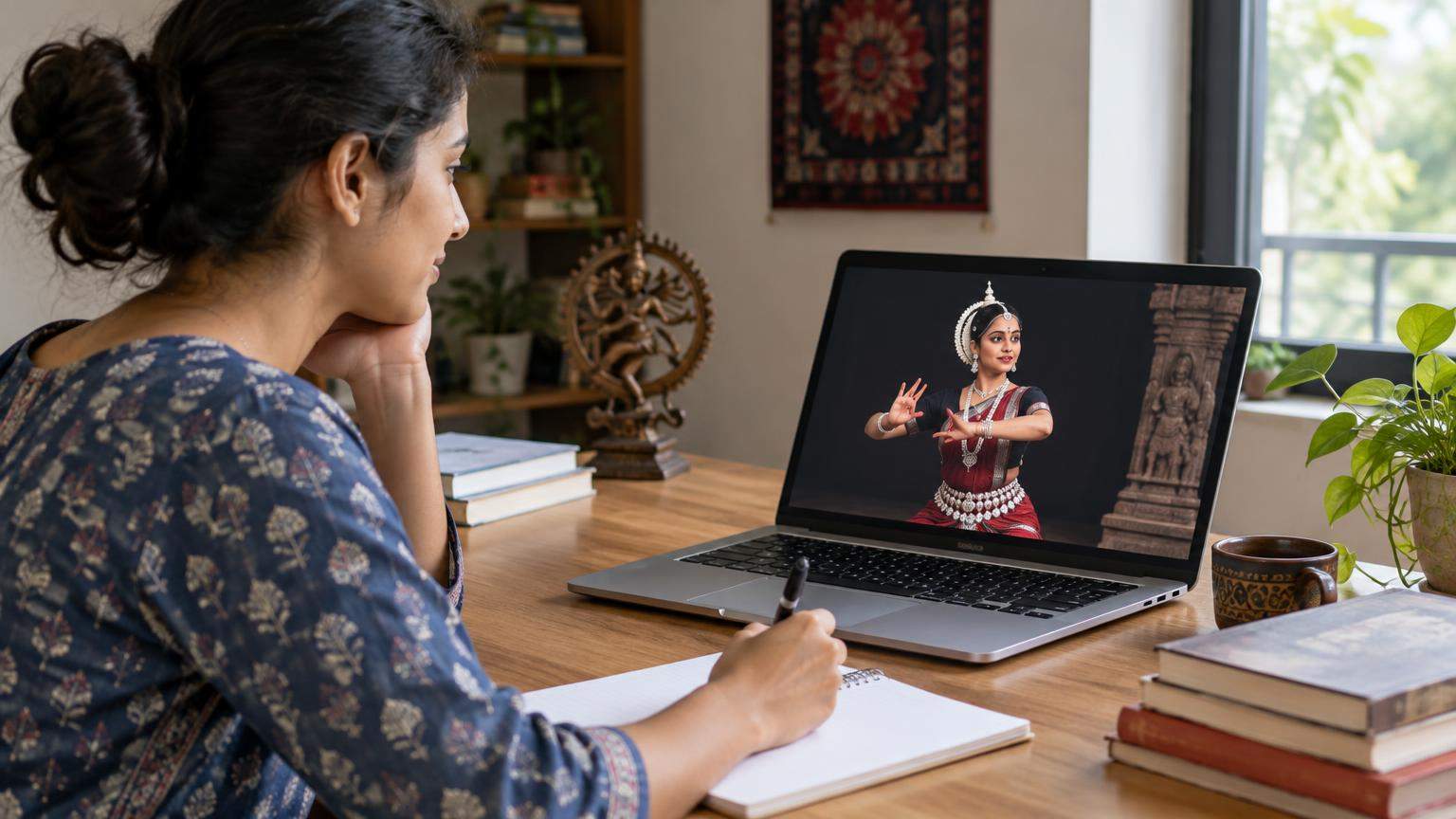
Guru background and lineage
In Indian classical dance, who you learn from matters as much as the syllabus. Reputable online academies showcase detailed teacher biographies and institutional histories. Srijati Arts, for instance, highlights the artistic director’s professional background and years of online teaching, and notes that they have taught students from different countries since 2010. [2] Many others similarly introduce their founder‑gurus and mention training under established Odissi masters. [8][9]
When reviewing a site or speaking to a teacher, look for:
- Names of their own gurus and institutions where they trained.
- Evidence of sustained practice and performance (festivals, productions).
- Clear photos or videos of the teacher dancing Odissi, not just generic stock images.
Syllabus and progression
Odissi is more than a few steps; it is a complete system. Serious schools usually outline at least the main components they teach. Odissi Lessons Online, for example, lists core topics such as Tandava and Lasya aspects, the Navatala system, Pallavi, Ashtapadi and Moksha pieces as part of training. [1] Symbiosis’s diploma describes a multi‑year structure, indicating graded learning over five years. [5]
Before enrolling, ask to see:
- A written or verbal breakdown of beginner, intermediate, and advanced levels.
- Which basic exercises (chauka, tribhangi, pada bheda, hastas) are introduced when.
- How quickly repertoire items (mangalacharan, battu, pallavi, abhinaya) are taught relative to technique.
Be cautious if a beginner course jumps straight to complex choreographies without time spent on stance, alignment, and rhythm.
Batch size and individual attention
Many online academies advertise “individual attention” and detailed corrections, especially in small batches. Srijati Arts explicitly stresses personal guidance and corrections in its online dance education section. [2] In reality, learning quality depends heavily on how many students share a screen with you and how systematically corrections are given.
Ask schools:
- What is the maximum number of students in each batch?
- Does the teacher watch each student solo at least briefly each class?
- Are there periodic one‑to‑one review sessions built into group courses?
Language of instruction
Because online Odissi now serves learners around the world, teachers may teach in English, Hindi, Odia, or a mix. Platforms focused on global students, such as Odissi Lessons Online and ipassio, often indicate that they cater to international learners, but the exact language used in each class is not always clear on public pages. [1][6]
Clarify:
- Which language the teacher primarily uses during class.
- Whether rhythmic syllables (bols), lyrics, and meaning are explained in a language you understand.
- If written notes or notations are provided, and in what language/script.
Certification and exams
Not all online Odissi classes lead to formal credentials. Some academies provide internal certificates of completion; others prepare students for external exam boards or degree‑equivalent diplomas. Symbiosis’s online Visharad course, for instance, is positioned as a structured, long‑term programme with live classes and assessments akin to a performing arts degree. [5]
When certification matters to you, ask:
- What kind of certificate is issued (internal academy, exam board, or university‑affiliated)?
- What are the additional exam or registration fees?
- How often are exams/assessments conducted and in what format (online theory, video submissions, live practical)?
4. Understanding Fees, Hidden Costs and Value
Online Odissi fees in 2026 vary widely based on teacher seniority, format (1:1 vs group), and whether the programme is hobby‑oriented or exam‑driven. Public fee examples are limited, but they can illustrate what to expect.
Illustrative fee examples (not a universal standard)
As of 2026, Symbiosis Dance & Music lists a monthly fee of around ₹2,000 for its live diploma online Odissi class (Visharad, 5‑year course). [5] This suggests that structured, multi‑year programmes from institutional academies may price themselves in this general range for group classes, though figures can change and other schools may be higher or lower.
Other sites, such as Odissi Lessons Online, highlight “low cost price online lessons” but give exact amounts only on enquiry. [4] Marketplaces like ipassio usually set per‑class or package pricing independently for each teacher, which may be significantly higher for senior gurus or 1:1 sessions. [6]
Because of this variation, treat any number you see online as a reference point, not a fixed market rate.
Common additional or hidden costs
Beyond the headline monthly fee, you may need to budget for:
- Registration or admission fee (one‑time) – many Indian academies charge this, even if it is not listed publicly.
- Exam and certification fees – especially for Visharad‑type or board‑aligned courses, assessments are often billed separately from classes. [5]
- Costume and performance expenses – platforms like Pracheeti Odissi explicitly help students prepare for performances with notations, recitation and music. [9] When you reach performance level, you will likely purchase costumes, jewellery, and makeup on your own.
- Tech costs – a stable internet connection, a good webcam or smartphone, microphone, and possibly a tripod or stand.
- Payment gateway or international transfer charges – NRIs paying from abroad may incur forex or platform fees.
How to judge whether the fee is “worth it”
Instead of comparing only raw prices, assess:
- Teacher time per student – 20 students in a batch at ₹1,000/month may give you less real guidance than 8 students at ₹1,800.
- Materials included – are recordings, notations and music tracks provided (as at KumKum NrityaBhumika or Pracheeti Odissi)? [8][9]
- Clarity of syllabus – structured long‑term programmes (e.g., Symbiosis’s 5‑year diploma) [5] often justify higher fees than casual hobby classes.
- Consistency – how long has the teacher or school been running online? Srijati Arts, for example, points out that it has been teaching online since 2010. [2]
5. Time Zone and Schedule Planning (India & Abroad)
If you live outside India or juggle work and school, time zone planning is critical.
Schools that mention international time zones
Several Odissi schools explicitly state that they cater to students abroad:
- Srijati Arts notes that students can “join live classes from different time zones” and that they have learners from different countries. [2]
- Nrityasadhana describes offering online Odissi classes to people all over the world. [7]
- Odissi Lessons Online and other India‑based academies present themselves as online schools for global students, even when timetables are centred on Indian Standard Time (IST). [1]
Checklist for NRIs and working adults
Before committing, check:
- Exact IST batch timing – then convert it to your local time on multiple days of the week to account for weekend schedule differences.
- Weekday vs weekend options – weekend IST evenings can suit US and Europe mornings particularly well; weekday late evenings can work for Middle East and East Asia.
- Backup or alternative batches – ask whether you can temporarily join another batch if your work schedule changes.
- Recording access – academies such as KumKum NrityaBhumika that provide recordings for all batches [8] are especially valuable across time zones.
6. Tech Setup Checklist for Online Odissi
Most online Odissi schools expect you to use standard video‑conferencing tools. Odissi Lessons Online, for instance, names Google Meet, Microsoft Teams and Zoom as platforms for one‑to‑one and group classes. [1]
Basic technical requirements
- Internet: A stable broadband connection. For live video, many learners find that a consistent 10–20 Mbps connection (or higher) helps avoid freezing.
- Device: Laptop with webcam, or smartphone/tablet on a tripod.
- Camera placement: Position the camera far enough away to capture your full body, including feet and hands, without cutting off the top of your head during arm movements.
- Audio: Use speakers loud enough to hear bols and music clearly; an external mic or headset can help the teacher hear your recitation if required.
Physical practice space
- Non‑slippery floor (avoid highly polished tiles without a mat).
- At least a few feet of free space around you to extend arms and move sideways.
- Minimal visual clutter so the teacher can see your stance and lines.
Backup and safety plans
- Mobile hotspot as backup if broadband drops.
- Confirm with your school whether they will share recordings or allow you to make a reference recording if you lose a class because of connectivity (subject to their privacy policy).
If you are also interested in teaching dance online, explore our guide to starting online Odia dance classes. It covers lesson planning, camera setup, teaching platforms, student enrolment and class management from a teacher’s perspective.
7. Red Flags: When to Think Twice About a School
While many schools work hard to adapt Odissi authentically to online formats, some red flags should make you cautious.
- No verifiable teacher information: Reputable sites like Srijati Arts, KumKum NrityaBhumika and Pracheeti Odissi showcase founder names, photos, and biographies. [2][8][9] If an advertisement simply says “expert teacher” with no name or background, proceed carefully.
- No syllabus or level description: Contrast this with Odissi Lessons Online listing specific elements such as Pallavi and Ashtapadi, or Symbiosis describing a 5‑year Visharad course. [1][5] A total lack of structure can mean unplanned teaching.
- Very large batches with minimal corrections: Schools that care about quality usually emphasise personal guidance or small‑group attention. [2] If a demo shows 30+ students on screen and the teacher barely glances at individuals, learning may suffer.
- Unclear payments or only untraceable methods: Larger platforms like ipassio use formal payment gateways and invoices. [6] Be careful if you are asked to send money only to anonymous wallets without receipts or written terms.
- Over‑promising results: Any claim that you will “master Odissi in a few weeks” conflicts with the long‑term, multi‑year structure seen in genuine programmes such as Symbiosis’s. [5]
8. How to Vet a School or Guru Before Paying
1. Take a demo or trial class
Most serious online Odissi teachers are open to at least one demo or paid trial class, even if it is not advertised directly. Use this session to observe:
- How clearly the teacher breaks down basic postures and movements.
- Whether they watch and correct each student actively.
- How comfortable you feel asking questions in their teaching style and language.
2. Watch performance videos
Look for performance recordings of the guru or school on their site or official channels. Nrityagram’s Virtual Steps pages, for example, connect their online offerings to a long history of professional Odissi performance. [10] Similarly, many schools share clips from recitals, festivals, or student showcases. You are not judging aesthetic taste alone; you are checking whether the movement quality reflects what you want to learn.
3. Check how long they have taught online
Experience with online pedagogy matters. Srijati Arts, for instance, notes that it has been offering online Odissi classes since 2010 and has students from multiple countries. [2] Institutions and teachers who have invested years into online formats are more likely to have reliable systems for tech, feedback and scheduling.
4. Look for third‑party presence
Beyond the school’s own website, check whether any of its courses or teachers appear on structured platforms like ipassio, which list teacher profiles, class details and reviews. [6] This is not a guarantee of quality, but it adds another layer of visibility outside the school’s own marketing.
9. Questions to Ask Before You Pay
Use this checklist in your first email or call with any prospective school.
About classes and learning
- Is this batch meant for hobby learners or serious exam‑oriented students?
- What topics and items will we cover in the first 6–12 months?
- What is the maximum batch size?
- How are corrections given in group sessions?
- Are class recordings, notes or notations provided (as at KumKum NrityaBhumika or Pracheeti Odissi)? [8][9]
About fees and policies
- What exactly is included in the monthly fee (number of classes, duration per class)?
- Are there separate registration, costume, or exam fees, especially for long‑term diplomas (as with Symbiosis’s 5‑year course)? [5]
- What happens if the school cancels a class—do they reschedule or adjust the fee?
- Is there any refund option if I withdraw mid‑month?
- What payment modes are supported (UPI, bank transfer, card, international gateway for NRIs)? [6]
About time zones and attendance
- What is the class time in IST, and can you suggest equivalent times for my country?
- If I miss a class due to work or time zone clashes, can I attend a different batch or rely on recordings (where offered, as at KumKum NrityaBhumika)? [8]
About progress tracking
- How do you track student progress?
- Are there periodic assessments or exams (as in diploma‑structured courses)? [5]
- Will I receive any report, feedback summary, or certificate after a level is completed?
10. Sample Comparison Table: How Three Real Schools Present Their Offering
The table below uses publicly available information from three online Odissi providers as of late 2026. It is not a ranking or endorsement, just an illustration of how offerings differ. Always check each school’s current website for up‑to‑date details.
| School / Platform | Main Online Format | Key Features (as publicly described) | International Focus | Fee Info Publicly Visible? |
|---|---|---|---|---|
| Odissi Lessons Online (GAALC) [1][4] | Live one‑to‑one and group interactive classes via Zoom/Meet/Teams | Teaches core Odissi elements including Tandava & Lasya, Navatala, Pallavi, Ashtapadi, Moksha; positions itself as a low‑cost online academy with Indian teacher‑gurus | Yes – presents itself as a global online school for students from different countries | Exact fees not listed on main page; described as “low cost price” and provided on enquiry |
| Srijati Arts (odissionline.com) [2] | Live structured online group classes | Emphasises personal guidance, detailed corrections, and individual attention; beginner courses described as step‑by‑step; claims online teaching experience since 2010 | Yes – states that students join from different countries and can attend from various time zones | Fees typically shared on enquiry; not specified on the main overview pages |
| Pracheeti Odissi [9] | Hybrid: live classes plus class recordings and video tutorials | Provides notations, recitation, music, class recordings and video tutorials to support learning and performance preparation | Implicit – offers online learning that can be accessed from anywhere, but time‑zone specifics are not heavily advertised | Fee details not clearly published on the general online classes page; likely shared once you contact the academy |
Use this style of comparison when evaluating any school: note the format, clarity of features, international suitability, and transparency about fees, rather than focusing only on marketing language.
Frequently Asked Questions
1. Can I start Odissi completely from scratch through online classes?
Yes. Several schools explicitly welcome complete beginners and describe step‑by‑step beginner courses online. Srijati Arts, for instance, offers beginner‑level online Odissi, and Symbiosis Dance & Music provides a 5‑year diploma starting from basics. [2][5] Progress may initially feel slower without in‑person corrections, but with a disciplined teacher and regular practice, beginners can build strong foundations online.
2. How many hours a week should I plan for online Odissi?
For hobby learners, one class of 60–90 minutes plus 1–2 hours of individual riyaaz is a realistic minimum. Serious learners in structured programmes such as the Visharad‑type course at Symbiosis [5] may need at least 3–5 hours a week including practice to make steady progress, especially once repertoire items begin.
3. Is it better to learn through a marketplace like ipassio or directly from a school’s own website?
Both approaches have merits. Marketplaces like ipassio provide profiles, reviews and secure payment gateways, and often specialise in one‑to‑one or very small‑group classes. [6] Direct academies may offer richer community experiences, group performances, and long‑term structured syllabi. Choose based on whether you prioritise personalised 1:1 teaching or being part of a larger school culture.
4. Do international cultural institutions support online Odissi?
Indian cultural bodies and missions abroad have increasingly hosted or promoted online and hybrid Odissi programmes along with other classical art forms, indicating formal recognition of digital learning as one mode of transmission. For example, official communication from Indian missions has described online Odissi alongside other classical offerings to global audiences. [3] However, these programmes usually complement, not replace, long‑term guru–shishya training.
5. How do I avoid injury when learning Odissi online?
Start with a thorough warm‑up, insist on clear demonstrations, and never force your joints into deep chauka or tribhangi before you develop strength. Check that your practice surface is non‑slippery and that the teacher can see your whole body to correct alignment. When in doubt, slow down and ask your teacher directly; online learning requires extra responsibility from the student’s side.
Disclaimer
This guide provides general educational information to help you compare online Odissi classes in 2026. Fees, schedules, course structures and recognition of diplomas can change without notice. Examples from specific schools and platforms are illustrative, not endorsements or rankings. Always confirm current details, terms and conditions directly with the institution or teacher before making payments or long‑term commitments.
Sources and Further Reading
Primary and supporting references. Verify time-sensitive information at the original publisher.
- Source Document — odissilessonsonline.com
- Source Document — www.odissionline.com
- 20607 Download3 — www.mea.gov.in
- Index — www.odissilessonsonline.com
- Online Odissi Dance Class — symbiosisdanceandmusic.com
- Online Odissi Dance Classes — www.ipassio.com
- Online Odissi — nrityasadhana.in
- Source Document — www.kumkumnrityabhumika.com
- Online Classes — pracheetiodissi.com
- Virtual Steps — www.nrityagram.org
Research date: October 20, 2026 (UTC). Links may change.